










AI may not work like the human brain after all, scientists discover

image

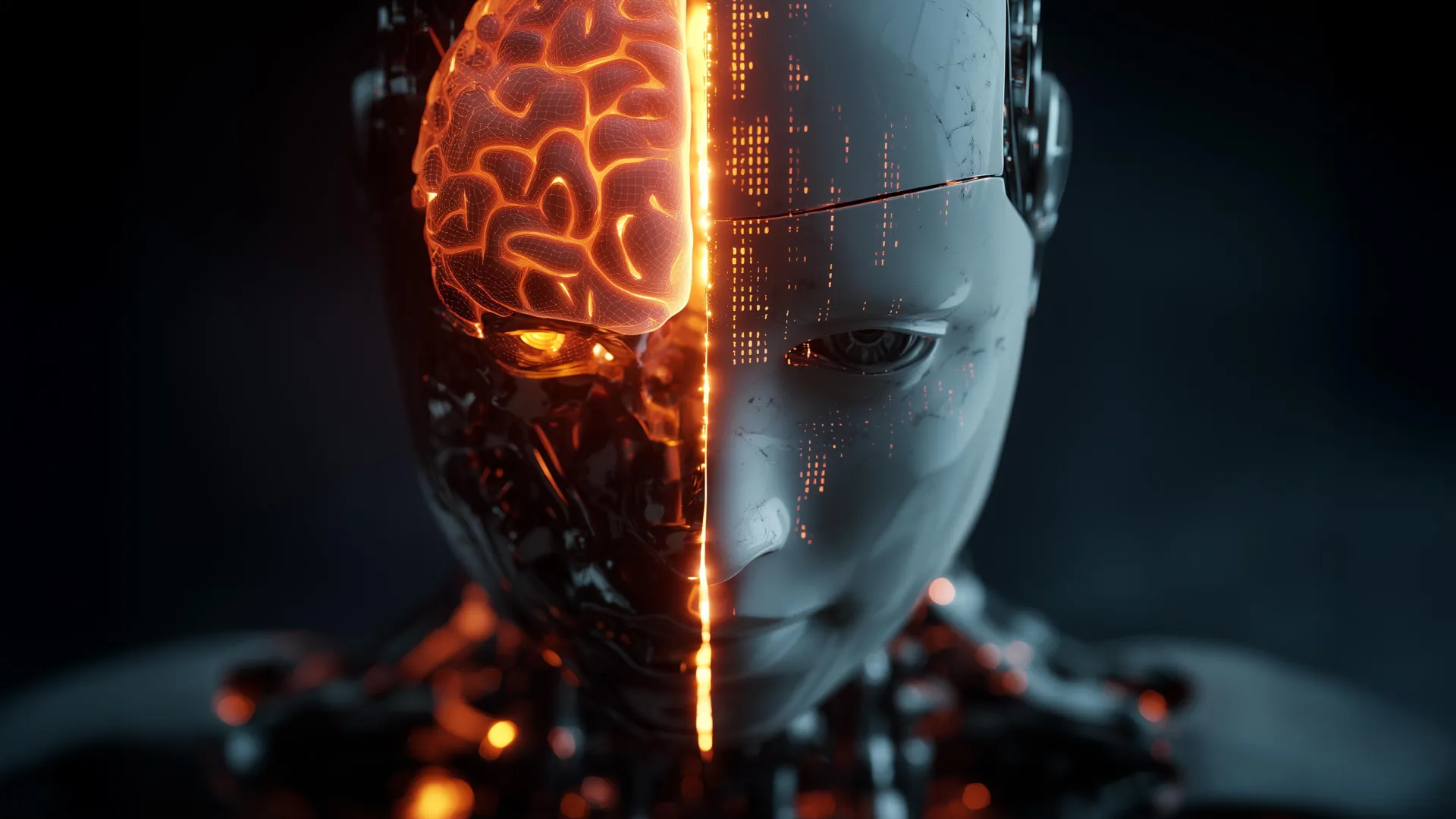
Artificial intelligence may be much less like the human brain than scientists have long assumed. A new study from York University has uncovered a surprising weakness in AI models that are widely used to understand how the brain processes visual information.

For years, researchers have relied on artificial neural networks (ANNs), computer systems designed to perform tasks such as recognizing objects in images, to investigate how vision works. Over the past decade, these models have become some of the leading tools for explaining the brain’s visual system. Their ability to reproduce patterns of brain activity has made them especially valuable in neuroscience.

But the new findings raise an important question: Just because AI can successfully imitate certain responses in the brain, does that mean it actually processes visual information in the same way?

“Artificial intelligence systems are often described as ‘brain-like’ because they can predict activity in parts of the brain that help us recognize objects,” says York University Assistant Professor Kohitij Kar, senior author of a new study. “Until now, scientists mostly tested this in one direction. They asked whether AI models can predict brain activity.”

A New Test Reveals a Hidden Problem With Brain-Like AI

The York University team decided to approach this question from the opposite direction. Rather than simply measuring how well AI could predict the activity of brain cells, they investigated whether recorded brain activity could also predict what was happening inside the AI models.

If these systems truly operate like the brain, the researchers reasoned, the relationship should work in both directions. To investigate, they developed a method called reverse predictivity testing, which allowed them to evaluate similarities that conventional tests could overlook.

“Ultimately, we need computational models to truly understand the underlying neural mechanisms of how we recognize objects. How do we see objects move? While it’s a very easy task that we do every day, computationally, though, it’s a very challenging problem,” says Kar, the Canada Research Chair in Visual Neuroscience and a member of York’s Centre for Vision Research and Centre for Integrative and Applied Neuroscience.

The research team, which included York Postdoctoral Fellow Sabine Muzellec, a trainee with the university’s Connected Minds program, examined responses to a wide variety of visual images.

Their tests included 1,320 natural photographs and realistic synthetic images featuring 10 familiar subjects: a bear, an elephant, a face, an apple, a car, a dog, a chair, a plane, a bird, and a zebra. These objects appeared against a variety of natural scenes and indoor or outdoor backgrounds. The researchers also introduced 300 additional images showing the same subjects in different visual styles, including outlines, drawings, simplified representations, and artistic interpretations.

AI Can Predict Brain Activity, but the Reverse Tells a Different Story

The results revealed a significant disconnect between artificial intelligence and biological vision.

AI models were generally successful at predicting the responses of recorded neurons, which are the specialized cells that transmit information throughout the brain. However, when the researchers reversed the process, those same neuronal responses were much less effective at predicting many of the models’ internal features.

This difference was particularly revealing because the researchers did not observe the same problem when comparing neuronal activity across different brains.

“The results were striking. While AI models can predict the neurons we recorded in the brain fairly well, the brain cannot equally predict many of the model’s internal features. Interestingly, this is not the case when neurons from one brain is compared against ones from another brain,” says Kar.

The findings suggest that an AI system can produce results that closely resemble those of the brain while relying on very different internal mechanisms. In other words, matching the brain’s responses does not necessarily mean that the underlying processes are the same.

Kar warns that this distinction could become increasingly important as artificial intelligence advances. If researchers continue refining models based only on how accurately they predict neural activity, differences between those models and actual primate brains could accumulate over time.

That would undermine one of the main reasons neuroscientists use these systems in the first place: to develop realistic explanations of how the brain works.

“The findings suggest that today’s AI systems solve visual tasks partly using internal strategies that the brain may not use. Importantly, the parts of AI models that align with the brain are also better at predicting real human behavior,” says Kar.

Why the Discovery Matters for Neuroscience and Human Behavior

The implications extend well beyond computer vision. Artificial intelligence is increasingly used to help researchers design experiments, study human behavior, and investigate neurological and psychological conditions. Many of these applications depend on the assumption that AI models process information in ways that resemble the human brain.

If that assumption is incorrect, researchers could draw misleading conclusions from models that appear accurate on the surface but operate differently underneath.

“Our findings challenge how similar current AI systems really are with the primate brain. We show that models that were previously thought to be brain-like rely on internal components that the brain does not appear to use. We provide a well-vetted diagnostic metric for the field,” says Muzellec.

Developing AI systems that more faithfully reproduce brain function could eventually improve research into conditions ranging from post-traumatic stress disorder to autism. For now, however, the newly identified differences highlight the need for caution when using existing models to investigate human behavior or guide clinical research.

The concern may also apply to other areas of neuroscience. Similar artificial intelligence models are already being used to study hearing, language, and movement. If those systems also rely on internal processes that differ from biological ones, researchers may need to reconsider how much they can reveal about the nervous system.

Building AI That More Closely Matches the Human Brain

Rather than suggesting that artificial neural networks should be abandoned, the findings provide a way to make them more useful and scientifically reliable.

By identifying which features of an AI model correspond to real neural activity, researchers can focus on developing systems that more accurately reflect the biological mechanisms behind perception.

“Our approach helps identify which parts of an ANN truly match brain activity, allowing us to build more reliable models for understanding how people see and interpret the world,” says Kar. “This is especially important for our autism research program, which builds on models of the neurotypical brain as a baseline.”

A neurotypical brain refers to one with patterns of neurological development and functioning generally considered typical. Establishing accurate models of these patterns is important for researchers investigating how perception and information processing may differ in conditions such as autism.

To help other scientists put their findings into practice, the team has released a publicly available testing toolkit that AI developers can use to evaluate their own models and identify opportunities for improvement.

Published in Nature Machine Intelligence, the study introduces a new approach to evaluating artificial intelligence that goes beyond measuring how well a system performs a task. The researchers argue that understanding whether AI reaches its results through processes that genuinely resemble those of the brain is just as important.

The discovery could help guide the development of a new generation of AI models that not only recognize the world with impressive accuracy, but also offer a more faithful picture of how the human brain makes sense of what it sees.

Don’t miss these tips!

We don’t spam! Read more in our privacy policy

LEAVE A REPLY

Please enter your comment!
Please enter your name here

Hot this week

Oura Ring Adds a Jet Lag Feature for Time Zone Travelers

Traveling to new places is good for the soul,...

Snubs & Surprises in the 2027 Dance/Electronic Grammy Nominations

The 2027 Grammy nominations were announced early Monday morning...

Zsela Invites You to The Party With New Album

CommentLoaderSave StorySave this storyCommentLoaderSave StorySave this storyZsela is getting...

Pipilotti Rist Wins MIT’s $100,000 McDermott Award

Pipilotti Rist Wins 2027 Eugene McDermott Award in the...

Topics

Oura Ring Adds a Jet Lag Feature for Time Zone Travelers

Traveling to new places is good for the soul,...

Zsela Invites You to The Party With New Album

CommentLoaderSave StorySave this storyCommentLoaderSave StorySave this storyZsela is getting...

Snubs & Surprises in the 2027 Dance/Electronic Grammy Nominations

The 2027 Grammy nominations were announced early Monday morning...

ART X Lagos 2026 Art Across Borders: Redefining Value

Exploring human anatomy through sustainable materials: Ghizlane Sahli’s Histoires...

Featured Artist | Darrell Black

Darrell Black Frankfurt, Germanyhttp://darrell-black.pixels.com/@definismart My Darrell Urban Black, an American visual...

Related Articles

Popular Categories

News Feed

Norris expects tough Vegas GP amid McLaren speed struggles

Lando Norris has admitted he expects a "tough day" in the Las Vegas Grand Prix, despite securing a second-row start, with the McLaren driver...

Antonelli’s ‘big risk’ pays off in Vegas Qualifying

Kimi Antonelli admits that he "took a big risk" after finishing fastest in Qualifying for the Las Vegas Grand Prix, with the Mercedes driver...

Russell stunned by ‘insane’ tow power in Las Vegas

George Russell has admitted that he was surprised by the “insane” tow power in Qualifying at the Las Vegas Grand Prix, with the Mercedes...

Alpine left disappointed despite Gasly’s ‘perfect’ Q2 lap

A Las Vegas GP Qualifying session that briefly promised much more ended in disappointment for Alpine as Pierre Gasly and Franco Colapinto finished at...

What the teams said – Qualifying in Las Vegas

MercedesRussell topped FP3 and went into Qualifying as the favourite for pole. He was quick in Q1 and Q2 as well, while Antonelli only...

Lindblad’s Vegas Qualifying ‘such a mess’ despite P5 start

Arvid Lindblad believes his Qualifying performance for the Las Vegas Grand Prix "was such a mess", despite the Racing Bulls driver set to start...

What To Watch For in the Las Vegas Grand Prix

From an eye-catching front row to Ferrari trying to recover from Qualifying disappointment, and from drivers starting out of position due to grid penalties...

What are the tyre strategy options for the Las Vegas GP?

Kimi Antonelli was quickest in Qualifying but a five-place grid drop means Max Verstappen inherited pole position in Las Vegas, but will he be...

Wolff reflects on impact of tow in Las Vegas Qualifying

Toto Wolff has explained how Mercedes learned about the effectiveness of the slipstream during Qualifying for the Las Vegas Grand Prix, with the Silver...

Thinking Machines releases Inkling 2 Mini, a looped AI model for laptops

Thinking Machines Lab has released Inkling 2 Mini, an open-weights model small enough to run on a laptop. The lab says it leads every...

Ways you can help your Fitbit’s battery last longer

Easy ways to get longer charges from your...

The pros and cons of using a VPN over encrypted DNS

A VPN protects more than your DNS queries,...

Anthropic ends its first week worth $1.6tn as VCs count $25bn stakes

Anthropic ended its first week of trading worth $1.6tn on a fully diluted basis, CNBC’s Jordan Novet reported on Saturday. Only six US companies...

China says it has built 1,260 5G factories as it tests 6G sensing for cars

China has built 1,260 5G factories and connected all 41 of its major industrial categories to its industrial internet, state broadcaster CCTV said, Bloomberg...

Why your ping is terrible (even though you have fast internet)

Your speed test looks great, but your games...

Time may be far stranger than we realize. Scientists have a way to test it

We measure time constantly, from the ticking hands of a clock to the changing numbers on a smartphone screen. Yet despite how familiar time...

CrowdStrike is reportedly in talks to buy cybersecurity firm Zscaler

CrowdStrike is in talks to acquire Zscaler, Bloomberg reported on Friday. A deal would be one of the largest ever in cybersecurity. The report cites...

LiDAR Glasses For the Visually Impaired

The human brain has a fairly remarkable ability to take any sensory input and convert it into another type. Most notably, those with vision...

How do those ‘metal detector’ apps for your phone actually work?

Your phone can be a metal detector, but...

Popular articles

Norris expects tough Vegas GP amid McLaren speed struggles

Lando Norris has admitted he expects a "tough day" in the Las Vegas Grand Prix, despite securing a second-row start, with the McLaren driver...

Antonelli’s ‘big risk’ pays off in Vegas Qualifying

Kimi Antonelli admits that he "took a big risk" after finishing fastest in Qualifying for the Las Vegas Grand Prix, with the Mercedes driver...

Russell stunned by ‘insane’ tow power in Las Vegas

George Russell has admitted that he was surprised by the “insane” tow power in Qualifying at the Las Vegas Grand Prix, with the Mercedes...

Alpine left disappointed despite Gasly’s ‘perfect’ Q2 lap

A Las Vegas GP Qualifying session that briefly promised much more ended in disappointment for Alpine as Pierre Gasly and Franco Colapinto finished at...

What the teams said – Qualifying in Las Vegas

MercedesRussell topped FP3 and went into Qualifying as the favourite for pole. He was quick in Q1 and Q2 as well, while Antonelli only...

Lindblad’s Vegas Qualifying ‘such a mess’ despite P5 start

Arvid Lindblad believes his Qualifying performance for the Las Vegas Grand Prix "was such a mess", despite the Racing Bulls driver set to start...

What To Watch For in the Las Vegas Grand Prix

From an eye-catching front row to Ferrari trying to recover from Qualifying disappointment, and from drivers starting out of position due to grid penalties...

What are the tyre strategy options for the Las Vegas GP?

Kimi Antonelli was quickest in Qualifying but a five-place grid drop means Max Verstappen inherited pole position in Las Vegas, but will he be...

Wolff reflects on impact of tow in Las Vegas Qualifying

Toto Wolff has explained how Mercedes learned about the effectiveness of the slipstream during Qualifying for the Las Vegas Grand Prix, with the Silver...

Thinking Machines releases Inkling 2 Mini, a looped AI model for laptops

Thinking Machines Lab has released Inkling 2 Mini, an open-weights model small enough to run on a laptop. The lab says it leads every...

Ways you can help your Fitbit’s battery last longer

Easy ways to get longer charges from your...

The pros and cons of using a VPN over encrypted DNS

A VPN protects more than your DNS queries,...

Anthropic ends its first week worth $1.6tn as VCs count $25bn stakes

Anthropic ended its first week of trading worth $1.6tn on a fully diluted basis, CNBC’s Jordan Novet reported on Saturday. Only six US companies...

China says it has built 1,260 5G factories as it tests 6G sensing for cars

China has built 1,260 5G factories and connected all 41 of its major industrial categories to its industrial internet, state broadcaster CCTV said, Bloomberg...

Why your ping is terrible (even though you have fast internet)

Your speed test looks great, but your games...

Time may be far stranger than we realize. Scientists have a way to test it

We measure time constantly, from the ticking hands of a clock to the changing numbers on a smartphone screen. Yet despite how familiar time...

CrowdStrike is reportedly in talks to buy cybersecurity firm Zscaler

CrowdStrike is in talks to acquire Zscaler, Bloomberg reported on Friday. A deal would be one of the largest ever in cybersecurity. The report cites...

LiDAR Glasses For the Visually Impaired

The human brain has a fairly remarkable ability to take any sensory input and convert it into another type. Most notably, those with vision...

How do those ‘metal detector’ apps for your phone actually work?

Your phone can be a metal detector, but...