
How companies are using AI to support sustainability goals

image

The opinions expressed by Trellis expert contributors are their own, not those of Trellis.

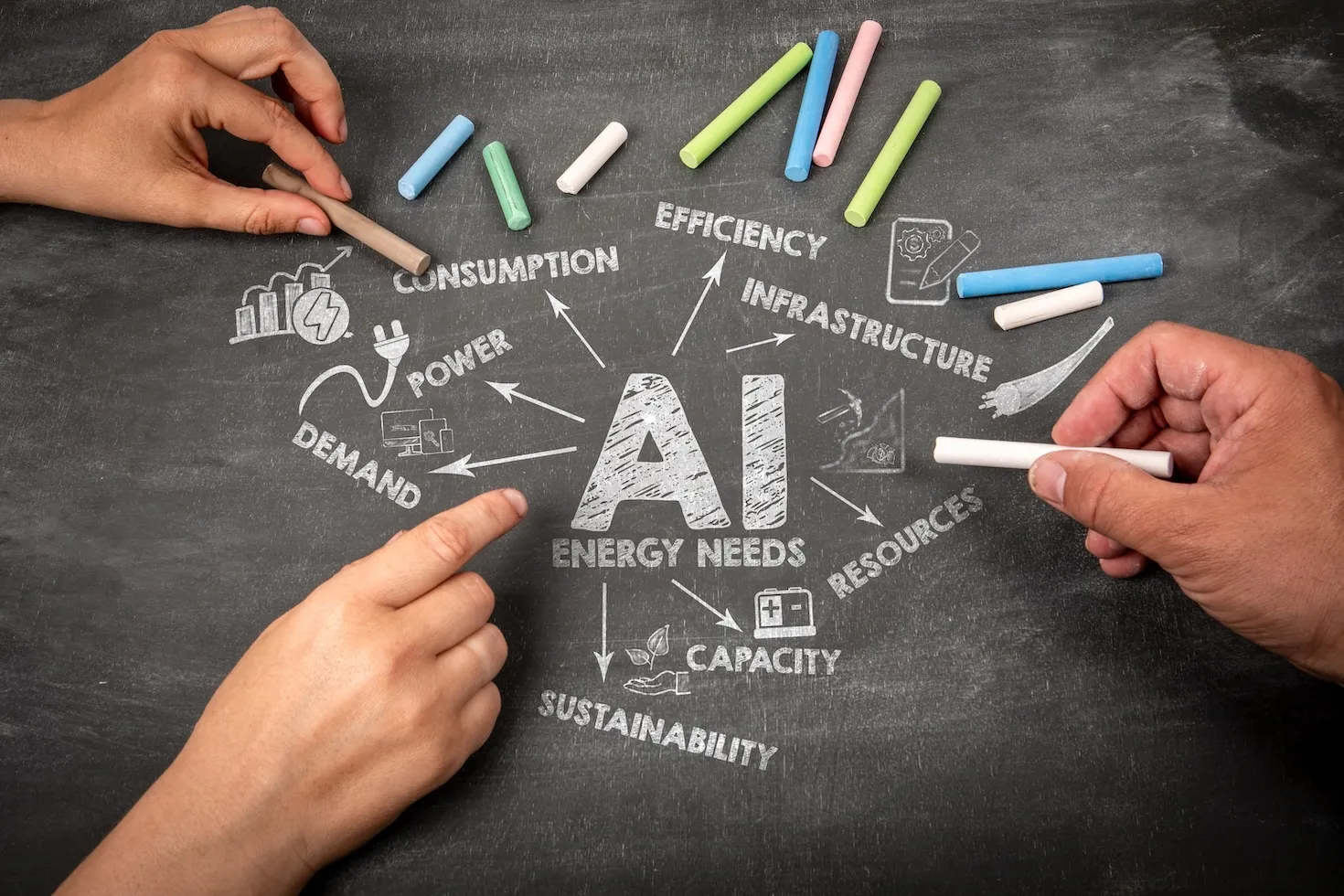
Sustainability practitioners have a judgment call to make: Do the carbon emissions and other impacts of artificial intelligence outweigh the potential benefits? 

The calculus remains unclear. Estimating the costs of AI model use is challenging, in part because certain impacts — emissions generated during training runs, for instance — are omitted from some calculations.

This uncertainty shouldn’t prevent practitioners from exploring uses of AI in sustainability. The tools explored here present a clear case for doing so.

Already at work: AI optimization

Cub is a Midwest grocery chain that historically counted on employees’ experience for forecasting, ordering and store operations. In a sector where any shrinkage or food waste cuts already slim profit margins, the business wanted more advanced solutions. 

It found one with Afresh, a San Francisco software company that uses AI to forecast demand, optimize ordering and reduce waste. During a three-month pilot, Afresh helped Cub increase sales by more than 2 percent and cut inventory holdings by 7 percent. When it was fully rolled out, produce shrink fell 18 percent, according to Cub’s chief information officer. In addition, the company is now on track to avoid more than 1,200 metric tons of greenhouse gas emissions, 43 million gallons of water and 2 million pounds of food waste annually.

Here’s another example. Heidelberg Materials wanted to reduce emissions from one of its cement plants, a challenge in an industry where 30 percent of a plant’s emissions come from the combustion of fuel. Its solution was to deploy software firm Gigaton’s AI platform at its Mokra plant in the Czech Republic. 

The goals were lower fuel costs, lower emissions and improved clinker quality. In this instance, the AI runs on top of the plant’s existing advanced process control systems where it adjusts key parameters, including fuel mix, kiln speed and oxygen levels, resulting in lower energy costs and reduced emissions. 

The results are promising. In the first month of continuous operation, Heidelberg’s plant saw a 4 percent cut in its average cost of fuel and a 2 percent reduction in fuel-derived emissions. Lower heat consumption also let the team shift the fuel mix away from heavy fuel oil and toward cheaper, less carbon-intensive fuel sources. 

Another effective application: Digital twins

One exciting area of development is AI-enabled “digital twins,” which simulate virtual replicas of physical objects or systems. By combining AI systems with knowledge of company processes and systems of record, businesses can identify process-related bottlenecks and unlock sustainable value in unexpected ways.

This June, for instance, Unilever and Accenture announced a multi-year partnership to scale AI-enabled digital twins of processes used to manufacture soap, detergent, deodorant and food. The goal is to build 40 live-data twins — virtual models of equipment and production lines fed by real-time data from the shop floor — that will reduce the process variabilities that cause waste, stoppages and excess energy use. 

At a Unilever plant in Raeford, North Carolina, a twin of the deodorant stick production for Dove, Degree and Axe is already predicting 95 percent of process flow restrictions and delivering a 20 percent reduction in waste. 

Another twin in Haldia, India, is optimizing fan speeds, temperature settings and moisture controls that resulted in a reduction in thermal energy use over two years.

For the future: Analysis of nature-based risks 

Another area of active exploration is an AI-driven method that can improve corporations’ understanding of economic impacts, risks and opportunities associated with the use of natural resources. 

This emerging approach, known as Nature Adjusted Economic Valuation (NAEV), can help companies in extractive, manufacturing and other resource-intensive industries assess their reliance on ecosystem services — and the financial impacts they might face if those services were no longer available.

In the NAEV modeling studies, AI supports the analysis of companies that rely on some form of natural capital, say water or timber, for its core value-creating process. Using AI, we can compile and analyze vast volumes of data from field studies and computational models of the ecosystems that provide those services and project how far those ecosystems are from becoming degraded and eventually exhausted.   

Based on these analyses, we can then model the risks related to the potential loss of these ecosystem services and estimate the impact on key indicators of the companies’ financial viability — such as loss of revenue, business disruption costs and weighted average cost-of-capital.

Pilot studies are underway, and early results show the potential of this approach. Before the widespread use of AI, such analyses would be prohibitively time-consuming and expensive to undertake. 

The upside — understanding how to use resources more efficiently and identifying ecosystems best positioned to support such activity — seems likely to outweigh the potential negative impacts of AI use. 

Don’t miss these tips!

We don’t spam! Read more in our privacy policy

LEAVE A REPLY

Please enter your comment!
Please enter your name here

Hot this week

“Wicker” and What Straight Women Want

Critic’s Notebook“Wicker” and What Straight Women WantThe monster-romance movie,...

Jaylen Waddle injury update: Latest news on Broncos WR’s status in Week 9 game

Denver Broncos wide receiver Jaylen Waddle is being evaluated...

Topics

Related Articles

Popular Categories

News Feed

Jensen Huang agrees to testify before Congress

Ex-Nvidia CEO Jensen Huang has agreed to testify before Congress, House Foreign Affairs Committee Chairman Brian Mast said on Thursday, according to reports from...

Five ways Jensen Huang’s ouster from Nvidia could damage the AI industry

Nvidia CEO Jensen Huang’s confession that he had an affair (and reports of another one with a direct report) that led the board to...

Measles Reaches a New Peak, Thanks to RFK Jr. and His Opposition to Vaccines

When Lyndon B. Johnson was President in the late 1960s, opponents of the war in Vietnam used to taunt him with this phrase when...

Whoop just launched a social network

Whoop, the maker of screen-less fitness bands, is launching a social network on Thursday that lets its members follow friends and family and share...

Jensen Huang is out at Nvidia — who is Colette Kress, his interim replacement?

The Nvidia Board of Directors announced on Thursday morning that the company’s co-founder and CEO of 33 years, Jensen Huang, has resigned as president,...

Norwest pushes deeper into AI with new $4B fund

Norwest, a firm backed solely by Wells Fargo, has raised a $4 billion fund as it sets out to invest more in AI. This...

If the November Windows update fails to install on your PC, here’s what to do

ZDNET’s key takeaways The November Windows update may fail to install on some PCs. People who installed the preview update seem to be affected. Microsoft is rolling...

Cyberattack on Fireworks AI allowed hackers to access Notion customers’ chat transcripts

A cyberattack at Fireworks AI has exposed some of its customers’ data, the company has confirmed. Fireworks AI, a platform that developers use to...

Nancy Bailey: Discovery Learning or Direct Instruction?

Veteran educator Nancy Bailey knows that the “science of reading” movement has promoted a zeal for “direct instruction,” an approach to teaching that relies...

Safer healthcare substitution needs life-cycle evidence: Lessons from the post-amalgam transition

Mikulewicz, M., & Chojnacka, K. (2026). Safer healthcare substitution needs life-cycle evidence: Lessons from the post-amalgam transition. Environmental Science & Technology, 60(40), 28150–28152. https://doi.org/10.1021/acs.est.6c13088 Abstract Replacing...

‘Nature-based’ solutions could save insurers and policyholders billions

Read the full story at Inside Climate News. Wetlands restoration and wildfire prevention can drive down insurers’ costs and skyrocketing premiums, a new study shows. See...

More than 1,200 Colorado students have earned a climate ‘seal’: ‘We’re the ones growing up in this world’

Read the full story in The Guardian. A statewide initiative pairs climate-focused coursework with community service – and is spreading to other states.

How a reluctant Iowa farming county undid a ban on battery storage

Read the full story at Canary Media. Three brothers wanted to use some land for solar, batteries, and cattle grazing. First they had to convince...

Researchers offer three ways to alert users to AI hallucinations with ‘embodied’ agents

Read the full story from North Carolina State University. When a conversational AI character in an immersive environment says something false, how should the system...

Texas used to be ‘the best place’ to build data centers—but not anymore

Read the full story at Inside Climate News. Pushback on data centers has forced developers to seek out community permission, something the industry largely hadn’t...

We blasted mobile homes with hurricane‑force winds to test how they fail – and found clues for making affordable housing safer

by Elaina Sutley, University of Kansas and Arindam Chowdhury, Florida International University It’s 9:15 in the morning. The wind is roaring at 110 miles per...

A note from Re:Create: Making sense of the OpenAI amicus avalanche

Read the full post at Re:Create. For folks watching the AI litigation horizon for signs and portents of the future of fair use (it’s not...

Amid Iowa’s water crisis, factory farms get a pass on environmental permitting

Read the full story at Inside Climate News. More than a decade after the EPA found that Iowa wasn’t cracking down on polluting factory farms,...

Chemical identification and environmental fate of fluorescein during celebratory surface water dyeing: A field evaluation in the Chicago River

Getzinger, G. J., & Duffee, L. H. (2026). Chemical identification and environmental fate of fluorescein during celebratory surface water dyeing: A field evaluation in...

The green revolution may be turning purple

Read the full story at Anthropocene Magazine. The fertilizers that feed humanity are made in huge pressure cookers, heated to 450°C (840°F), in factories that...

Years after storms, clean-up crews meticulously separate the sentimental from the wreckage

Read the full story from NPR. As debris cleanup becomes a troubling reality for more and more disaster survivors, there’s a growing network of people...

Popular articles

Jensen Huang agrees to testify before Congress

Ex-Nvidia CEO Jensen Huang has agreed to testify before Congress, House Foreign Affairs Committee Chairman Brian Mast said on Thursday, according to reports from...

Five ways Jensen Huang’s ouster from Nvidia could damage the AI industry

Nvidia CEO Jensen Huang’s confession that he had an affair (and reports of another one with a direct report) that led the board to...

Measles Reaches a New Peak, Thanks to RFK Jr. and His Opposition to Vaccines

When Lyndon B. Johnson was President in the late 1960s, opponents of the war in Vietnam used to taunt him with this phrase when...

Whoop just launched a social network

Whoop, the maker of screen-less fitness bands, is launching a social network on Thursday that lets its members follow friends and family and share...

Jensen Huang is out at Nvidia — who is Colette Kress, his interim replacement?

The Nvidia Board of Directors announced on Thursday morning that the company’s co-founder and CEO of 33 years, Jensen Huang, has resigned as president,...

Norwest pushes deeper into AI with new $4B fund

Norwest, a firm backed solely by Wells Fargo, has raised a $4 billion fund as it sets out to invest more in AI. This...

If the November Windows update fails to install on your PC, here’s what to do

ZDNET’s key takeaways The November Windows update may fail to install on some PCs. People who installed the preview update seem to be affected. Microsoft is rolling...

Cyberattack on Fireworks AI allowed hackers to access Notion customers’ chat transcripts

A cyberattack at Fireworks AI has exposed some of its customers’ data, the company has confirmed. Fireworks AI, a platform that developers use to...

Nancy Bailey: Discovery Learning or Direct Instruction?

Veteran educator Nancy Bailey knows that the “science of reading” movement has promoted a zeal for “direct instruction,” an approach to teaching that relies...

Safer healthcare substitution needs life-cycle evidence: Lessons from the post-amalgam transition

Mikulewicz, M., & Chojnacka, K. (2026). Safer healthcare substitution needs life-cycle evidence: Lessons from the post-amalgam transition. Environmental Science & Technology, 60(40), 28150–28152. https://doi.org/10.1021/acs.est.6c13088 Abstract Replacing...

‘Nature-based’ solutions could save insurers and policyholders billions

Read the full story at Inside Climate News. Wetlands restoration and wildfire prevention can drive down insurers’ costs and skyrocketing premiums, a new study shows. See...

More than 1,200 Colorado students have earned a climate ‘seal’: ‘We’re the ones growing up in this world’

Read the full story in The Guardian. A statewide initiative pairs climate-focused coursework with community service – and is spreading to other states.

How a reluctant Iowa farming county undid a ban on battery storage

Read the full story at Canary Media. Three brothers wanted to use some land for solar, batteries, and cattle grazing. First they had to convince...

Researchers offer three ways to alert users to AI hallucinations with ‘embodied’ agents

Read the full story from North Carolina State University. When a conversational AI character in an immersive environment says something false, how should the system...

Texas used to be ‘the best place’ to build data centers—but not anymore

Read the full story at Inside Climate News. Pushback on data centers has forced developers to seek out community permission, something the industry largely hadn’t...

We blasted mobile homes with hurricane‑force winds to test how they fail – and found clues for making affordable housing safer

by Elaina Sutley, University of Kansas and Arindam Chowdhury, Florida International University It’s 9:15 in the morning. The wind is roaring at 110 miles per...

A note from Re:Create: Making sense of the OpenAI amicus avalanche

Read the full post at Re:Create. For folks watching the AI litigation horizon for signs and portents of the future of fair use (it’s not...

Amid Iowa’s water crisis, factory farms get a pass on environmental permitting

Read the full story at Inside Climate News. More than a decade after the EPA found that Iowa wasn’t cracking down on polluting factory farms,...

Chemical identification and environmental fate of fluorescein during celebratory surface water dyeing: A field evaluation in the Chicago River

Getzinger, G. J., & Duffee, L. H. (2026). Chemical identification and environmental fate of fluorescein during celebratory surface water dyeing: A field evaluation in...

The green revolution may be turning purple

Read the full story at Anthropocene Magazine. The fertilizers that feed humanity are made in huge pressure cookers, heated to 450°C (840°F), in factories that...

Years after storms, clean-up crews meticulously separate the sentimental from the wreckage

Read the full story from NPR. As debris cleanup becomes a troubling reality for more and more disaster survivors, there’s a growing network of people...