

The Met Museum’s “Chasing Clouds” is a pleasing romp through the technical problem of capturing clouds at photography’s beginning.

The original 1996 Windows XP default background is arguably the most viewed photo of all time; its cumulus puffs drifting across a way-too-blue sky are seared into my and countless others’ Y2K childhoods. Such images of fluffy clouds are so ubiquitous that it’s hard to believe they once presented one of photography’s greatest technological challenges. The Met exhibition Chasing Clouds is a pleasing romp through the history of this problem through a union of art and science, spanning the early 1800s to 1929 — roughly photography’s first century. While the medium showed promise as “the pencil of nature,” its first processes were overly sensitive to blue light, registering the sky as a blank white space, impossibly overexposed.
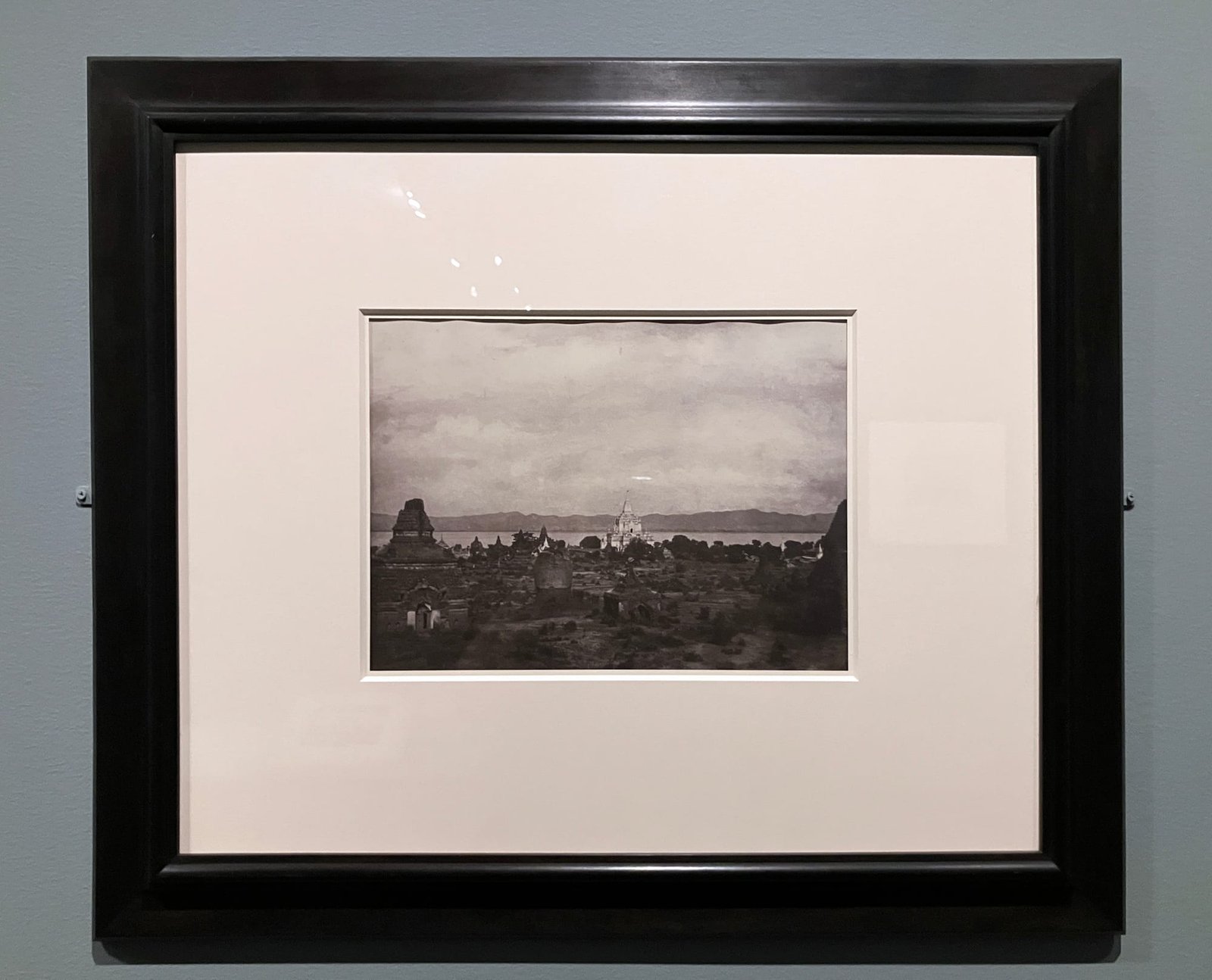
While this lent some images a minimalist mystique, like John Beasley Greene’s “The Nile in Front of the Theban Hills” (1853–54), other photographers resorted to painting clouds into their landscapes by hand. An initial breakthrough came when French photographer Gustave Le Gray figured out how to stitch together two pictures — one calibrated to sky, and the other to land and sea. (Photographic fakery is as old as the medium itself.)
Though the exhibition begins with painted cloud studies and ends with photographic modernism, visual discoveries unfold in a dialogue between painting and technology rather than as a scientific march from one to the other. This makes for a much more interesting story; obsolescence is often a capitalist public relations trick.