

Tibor Kalman, the graphic designer, was known for confrontational stances; a “self-styled bad boy” of his profession, as The New York Times once described him. But Kalman—who was the editor in chief of Colors magazine and created album covers for The Talking Heads—produced plenty that was witty and warm before he died a quarter of a century ago, at age 49. Notably, this included a series of charming and celebrated wristwatches that his son, Alex, brought back into production.
Analog watches may not seem like the most buzzy category in 21st-century retail, but these have, “for lack of a better word, a bit of a timeless design quality,” Alex Kalman says. In fact, design aficionados may recognize the three watches that have gone on sale this week through the website of M&Co Labs, Tibor’s design-product studio. They were originally part of a larger watch series tracing back to the late 1980s and early 1990s in which the elder Kalman treated the watch face as a space to subtly comment on time itself.
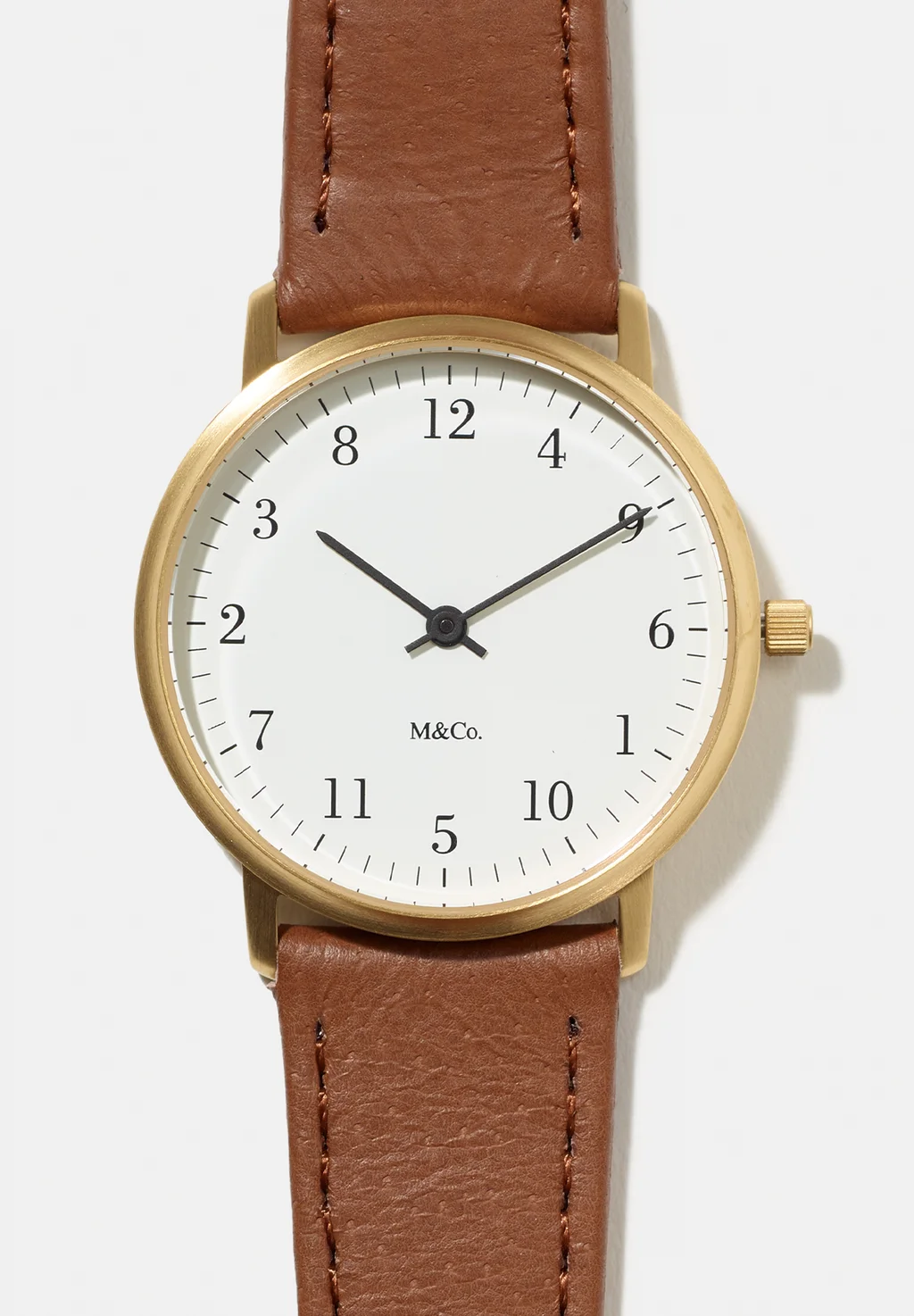
The watches became a flagship product for M&Co. In different ways, each gently challenges the functionality of a watch. One of them, dubbed “10-4-1,” eliminates all the hour numbers except for those three; it’s in the permanent collection of the Museum of Modern Art. Another, “Onomatopoeia,” replaces some numbers with tiny pictograms: a cat for 9, an egg for 12. The third, “Askew” simply jumbles the numbers, apparently at random. On the back, all three are inscribed “Waste Not A Moment.”
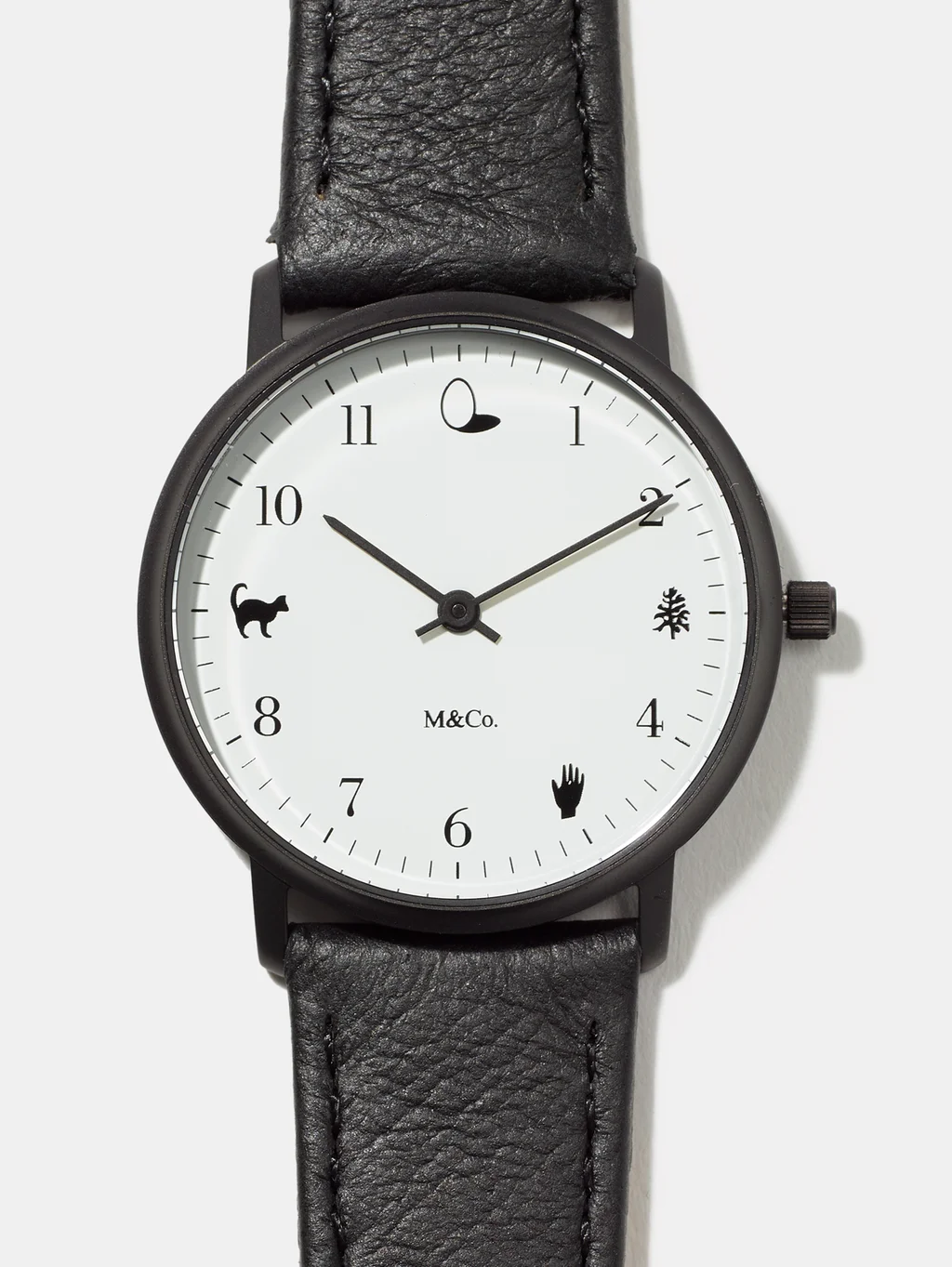
Today, the watches’ slightly impractical interfaces are arguably more subversive than when they were introduced. “It’s very funny that there’s all this effort for frictionless design, here is something so elemental as a watch face, but one that creates friction in trying to read the time on it,” Alex says. The urge to eliminate friction was present in Tibor’s era, but today it sometimes seems to be design’s primary function. “It’s come so much further than what he was initially reacting to,” Alex adds. And maybe that means it’s a perfect time for the watches to return.
Kalman became known for a distinct point of view, pushing his profession to face its social responsibilities, and tackling issues like race and AIDS in Colors. He also had a slew of client work, including design for musicians and the Times Square Redevelopment Corporation, under the auspices of M&Co. (The “M” stood for his wife and collaborator Maira Kalman, the artist, writer, and children’s book author.) In addition to the watches, the M&Co Labs spinoff produced a variety of clever objects, such as a paperweight shaped like crumpled paper, that were popular with the design-savvy set.
After Tibor died in 1999, Alex says, Maira focused on her own work, making licensing deals with other firms to manage M&Co Labs’ product line. While the watches stayed in distribution for years, that supplier relationship eventually fizzled, and they fell out of production.
More recently, Maira and Alex (who is also a filmmaker and founder/curator of Mmuseumm, a mini-museum in a former freight elevator in lower Manhattan), decided to produce new batches of a few of the watches. It’s a tentative first step toward bringing back M&Co as a family business of sorts.

“All the products, as the family likes to do, look at the conventions of things and play with them a little bit,” Alex says.
And that speaks to the potential appeal of the oddball, winky watches right now. When they were brand new, the watches were a means of “thinking of incredibly common vernacular everyday items that are part of our lives,” Alex says, “and how to play with them with that particular sensibility and share those ideas through everyday products, rather than just through design or editorial work.”
In a way, a time-keeping object’s role as material signifier of modernity is even more acute now that we track time on digital devices. A glance checking the hour may also bring news of a new follower, or a catastrophe. All the more reason, perhaps, to pause over that routine moment of noting where the clock stands.
“The faces themselves, which is obviously really where the character is, have a lot of soul and wit and humanism,” Alex says. “And I think that’s a really nice thing to offer people in our increasingly slick technological landscape.”
It doesn’t hurt that for some the watches are both iconic and nostalgic, classic symbols of a distinct moment in product-design history with a certain pre-smartphone status. At least, this new iteration of M&Co Labs will find out if it’s true that there’s something meaningful in bringing these objects back. If it goes well, they’ll try physical retail: “Either on the corner of Canal Street or the MoMA Store,” Alex jokes.