

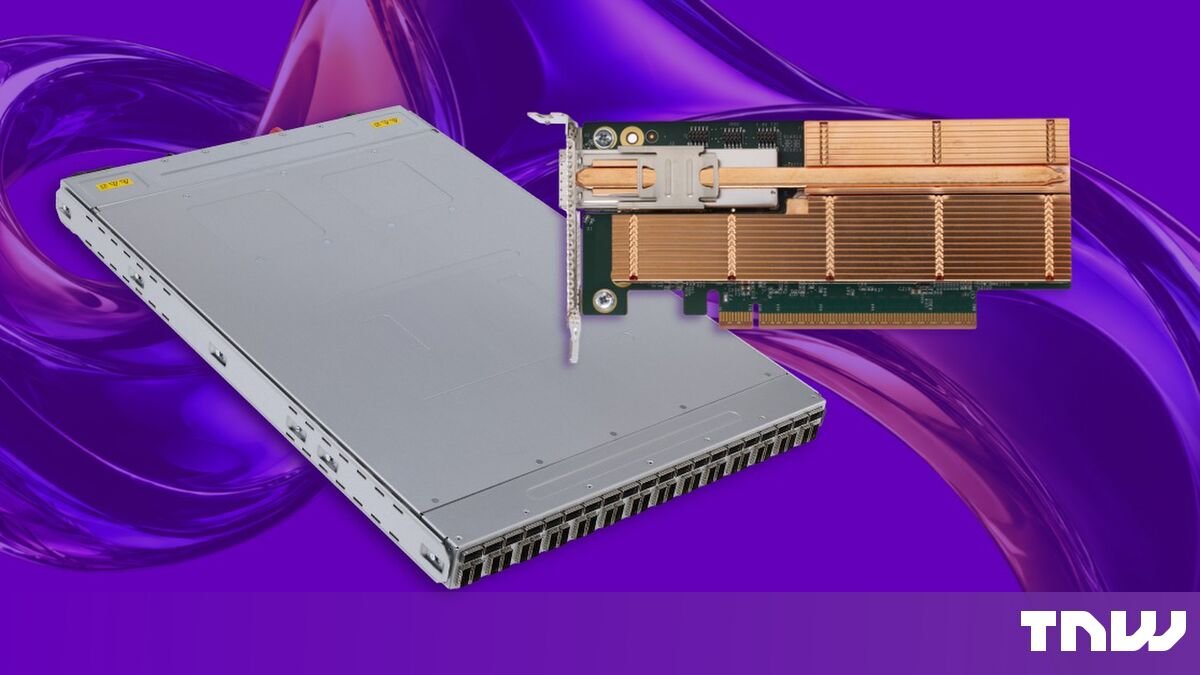
Cornelis, which Intel spun out in 2020, has launched CN6000, a family of 800G network cards and switches for AI and supercomputers. It claims lower latency than Nvidia’s InfiniBand, based on its own tests. Partner systems arrive in early 2027.
Cornelis, a networking company spun out of Intel, has launched CN6000, a family of 800G network cards and switches for AI clusters and supercomputers, it announced this week. It is pitching them as a rival to Nvidia’s InfiniBand.
In large AI systems, thousands of chips must constantly swap data. If the network is slow, expensive chips sit idle. “Every minute an accelerator waits on the network is capacity our customers paid for and didn’t use,” said CEO Lisa Spelman.
The main card uses Omni-Path, a networking technology Intel dropped in 2019 before spinning the business off as Cornelis in 2020. Cornelis says the card can handle 1.6 billion messages a second. It also says it is 21% faster than Nvidia’s InfiniBand at passing a small message, though that comes from its own tests.
A faster single message does not mean jobs finish 21% sooner, since that depends on the workload. Cornelis also launched a card for standard Ethernet networks, which most AI data centres use, with support for the newer Ultra Ethernet standard due later.
The cards work with chips from AMD, Intel, Nvidia and Qualcomm. Dell, Lenovo and Supermicro are among the server makers planning to support them, with systems due in early 2027.
Networking has become a hot spot in AI. Nvidia has spent billions on optical links, Huawei is betting on wiring over chips, and startups such as Upscale AI are building ways to connect rival chips. AMD, a Cornelis partner, is also building rack-scale systems to compete with Nvidia.