

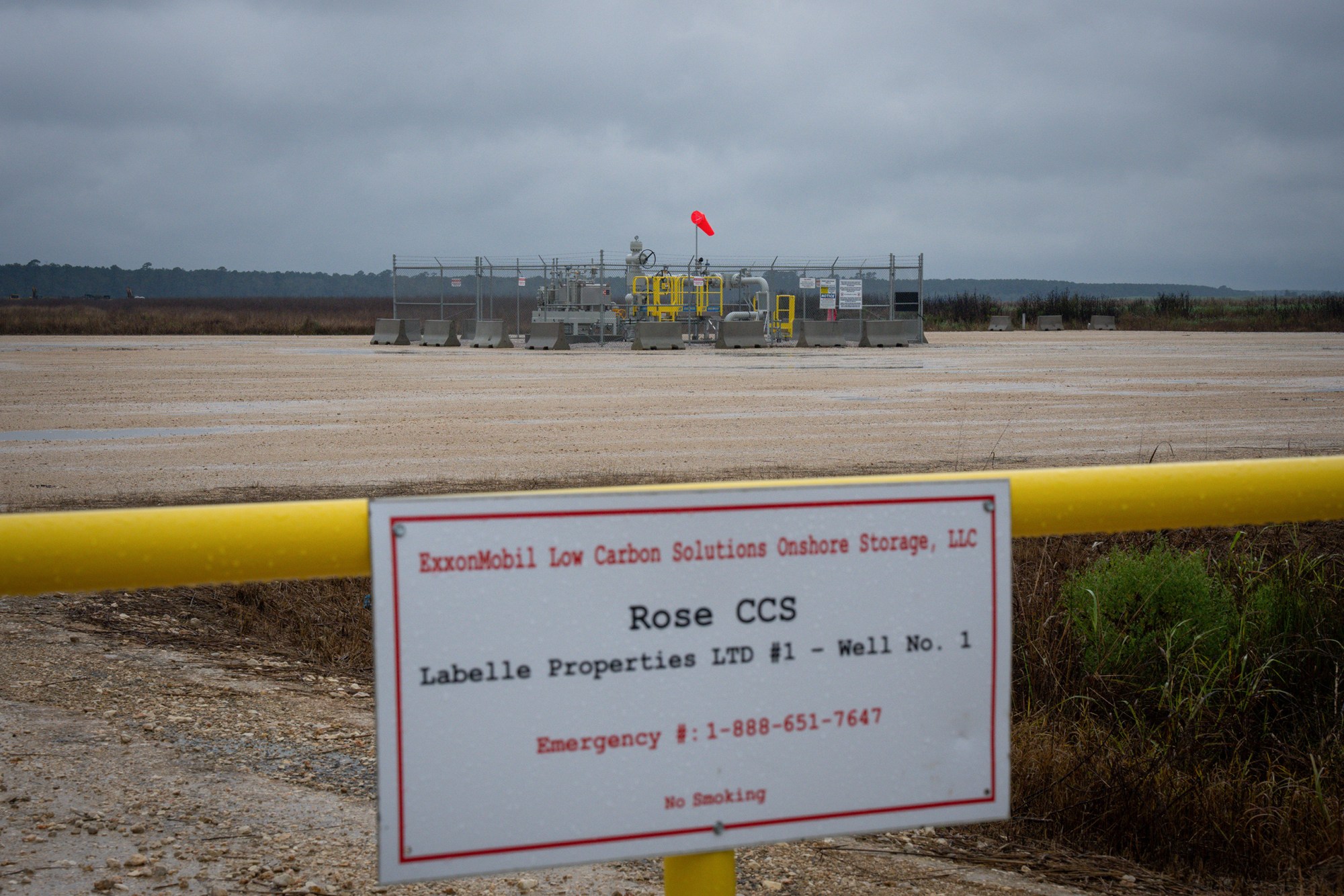
On a rural road outside Beaumont, a Texas energy giant is preparing to pump carbon dioxide underground to permanently store it and keep the gas from contributing to global warming. The project could be the first of its kind to start operating in the state.
It’s a long-awaited milestone for the oil and gas industry, which has touted carbon capture and storage as an important tool for cleaning up industry emissions. Texas lawmakers threw their support behind the technology, while state regulators spent years seeking permitting authority from the federal government to try to clear projects faster.
The Texas Railroad Commission, which oversees the oil and gas industry, won that authority late last year and approved this Exxon Mobil project in September. But the nearby community of Cheek has asked commissioners to reconsider the permit decision.
The area close to the project is predominantly Black, and many residents are working-class or elderly. People there don’t trust the company’s assurances that it will keep residents and their groundwater safe.
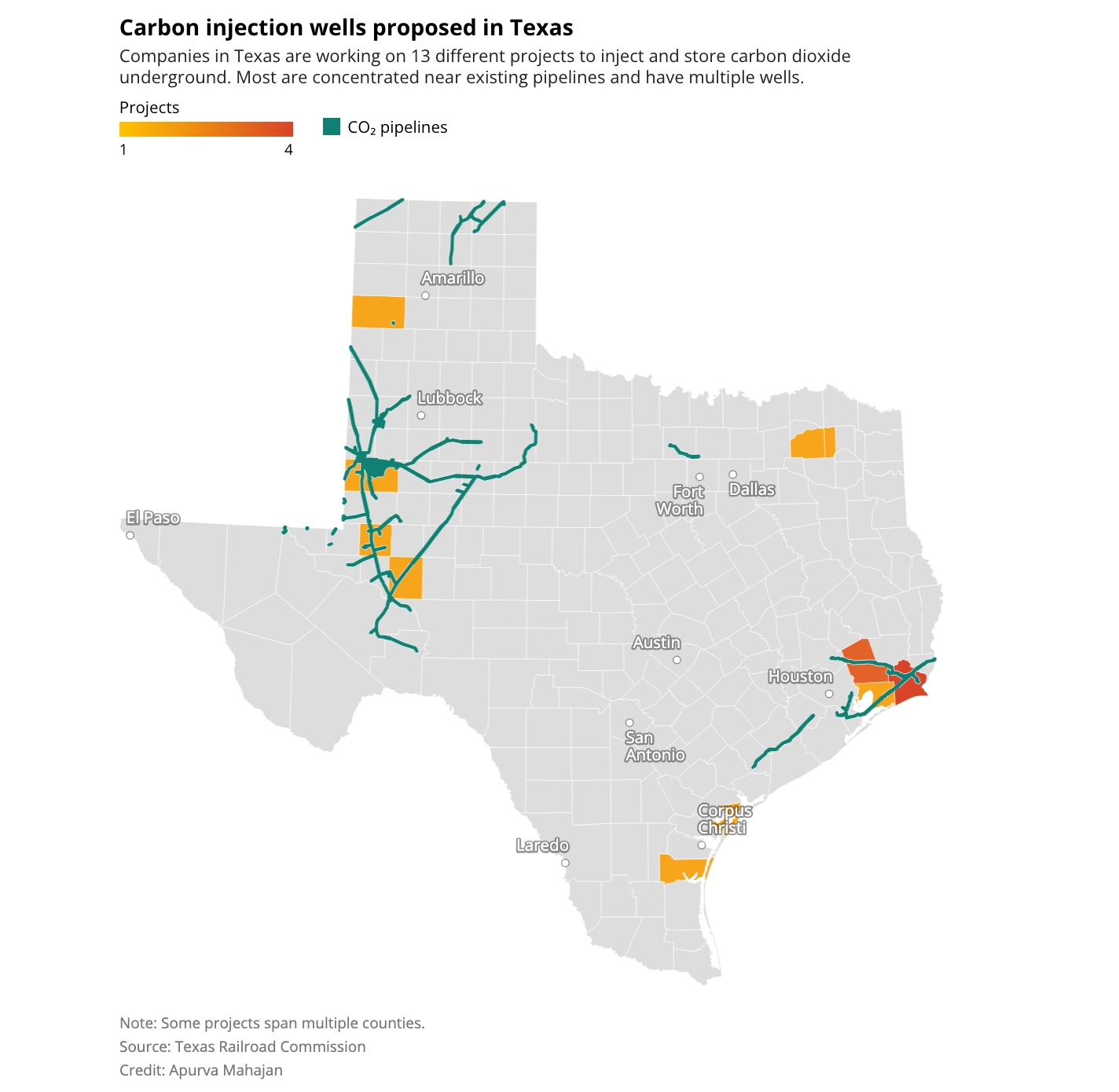
Only a small number of carbon storage wells have been permitted so far across the United States, and some CO2-related accidents have already happened. Experts and community advocates have warned of the risk for pipeline accidents and potential underground leaks. Leaders in Cheek are concerned the injected carbon dioxide could contaminate groundwater or get into the air and suffocate them. They worry emergency responders won’t be equipped to rescue them.
“We’re just shocked that they would want to do this so close to homes,” said Douglas Cormier, the 67-year-old president of the Cheek Texas Community Association, who grew up in the rural town and lives there with his wife near his daughters and grandkids.
Residents explained they don’t want to be the test subjects for the technology, and some experts argue it’s more distracting than effective in fighting climate change. Harvard University History of Science Professor Naomi Oreskes, who studies disinformation and climate change, has called carbon capture and storage “mostly a dangerous distraction.”
A recent investigation by Drilled and ProPublica showed it would take more resources than feasible for carbon capture and storage to reduce emissions enough to avoid extreme warming. Companies have canceled or paused nearly a third of 19 proposed carbon storage projects in Texas so far.
But carbon capture supporters argue that storing emissions is an important part of an “all of the above” approach to fighting climate change. Federal tax credits support carbon capture projects. Locally, East Texas remains attractive because of its existing carbon dioxide pipeline network (owned by Exxon Mobil), its geology, and nearby industrial facilities that might pay for their carbon to be stored.
 ” data-credit=”Jacob Lujan / The Texas Tribune”>
Jacob Lujan / The Texas Tribune
Exxon Mobil has seven agreements with companies to store the greenhouse gas. The volume of carbon dioxide injected underground through those agreements will equal emissions from 2 million cars.
“The community’s concerns around safety of any sort of an injection project are valid and real and need to be taken seriously,” said Nichole Saunders, senior director and lead counsel for energy transition with the Environmental Defense Fund. “At the same time, the need for more carbon management infrastructure to get to where we want to go on climate is also real.”
So far, the case has raised questions about whether companies and the Railroad Commission are doing enough to address community concerns as a backlog of projects awaits approval.
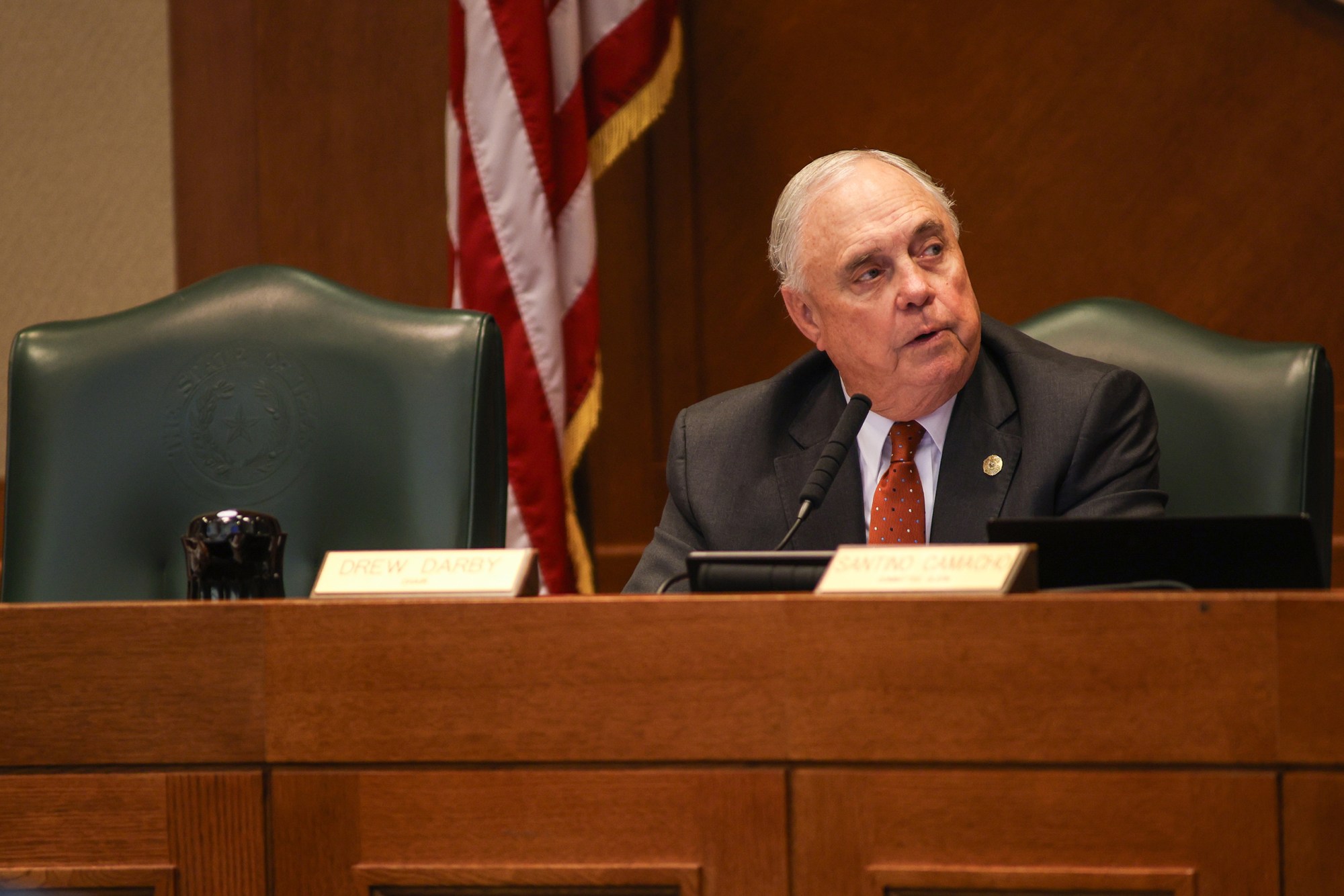
Agency watchdogs say the commission has a history of failing to keep communities safe from industry risks. It’s also facing pressure from state Representative Drew Darby, leader of the House’s energy resources committee, who told the agency at a September hearing that carbon-capture projects needed to be moving at “utmost pace while protecting the public.”
In a statement to the Tribune, Railroad Commission spokesperson Bryce Dubee said the organization has a record of protecting drinking water while regulating injection wells. Winning the authority to regulate carbon storage “speaks volumes to this expertise,” Dubee said.
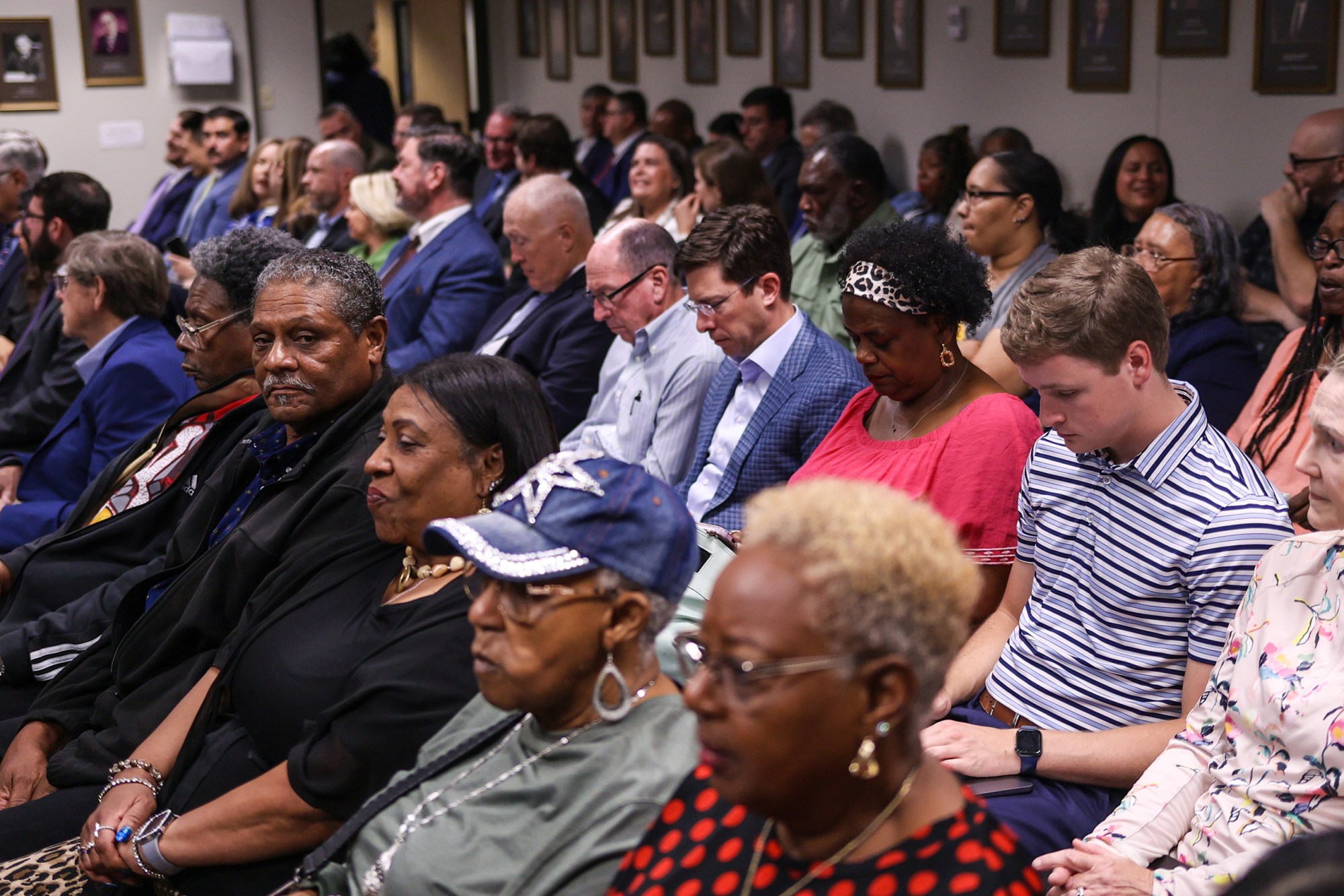
Cheek community members sit next to lawyers and oil and gas representatives as the Railroad Commission takes a vote on a proposed Exxon Mobil carbon storage system in East Texas, inside the William B. Travis State Office in Austin on September 15.
Jacob Lujan / The Texas Tribune
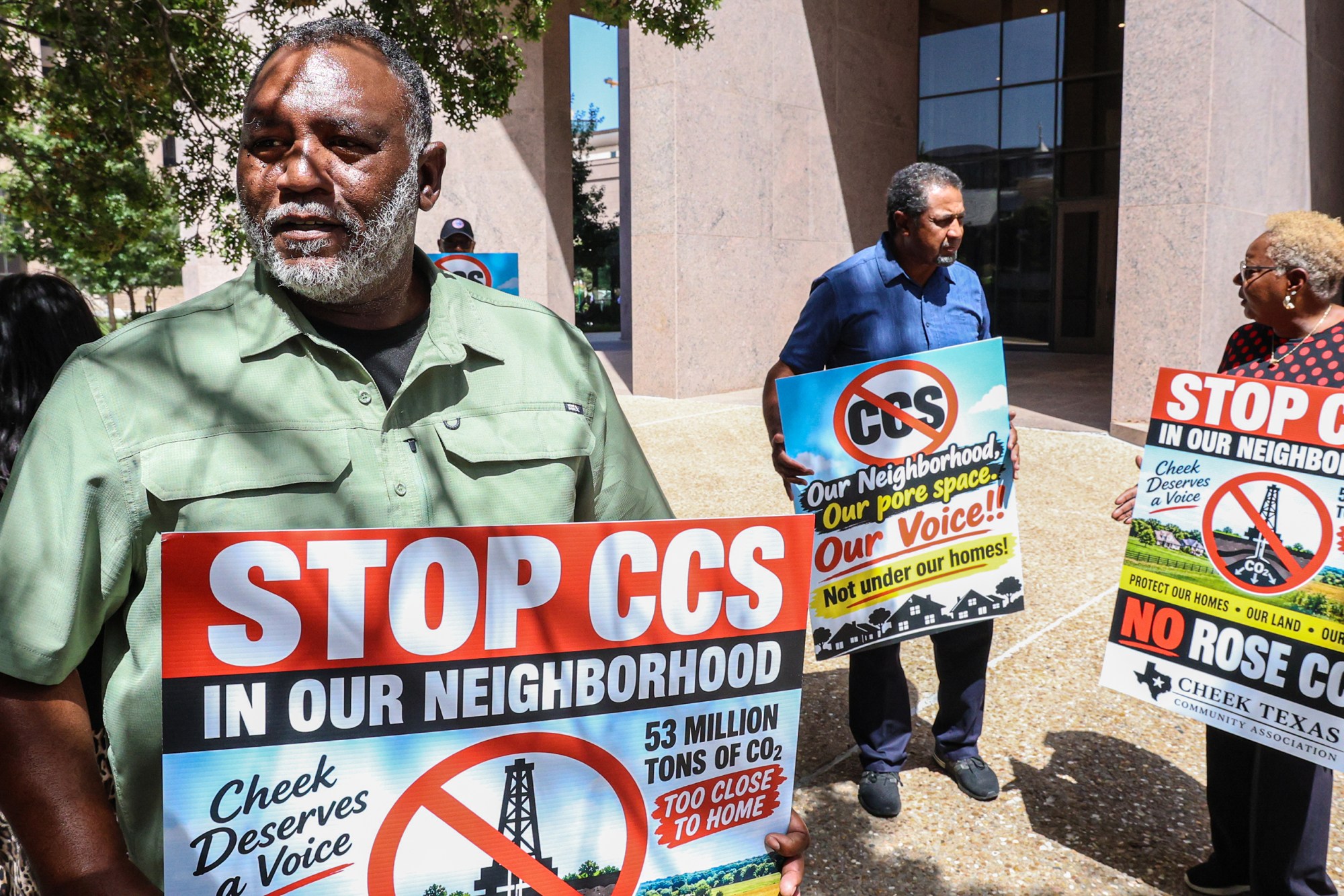
Cheek community members protest outside the William B. Travis State Office Building in Austin before taking a chartered bus back to East Texas after the Railroad Commission of Texas voted in favor of the Exxon Mobil carbon storage system.
Jacob Lujan / The Texas Tribune
Exxon Mobil held early meetings with community members in Cheek. The company’s permit requires it to install automatic shut-off systems for the injection wells, monitor the underground carbon dioxide plume, and post a phone number where the operators can be reached around the clock.
The permitting program requires coordination with local emergency officials, according to the commission. Exxon Mobil sponsors emergency training programs through the Texas A&M Engineering Extension Service in College Station.
“We want community members to know they can count on us to operate responsibly, communicate openly, and put safety first every day,” Senior Vice President Dominic Genetti wrote in a blog post.
 ” data-credit=”Jacob Lujan / The Texas Tribune”>
Jacob Lujan / The Texas Tribune
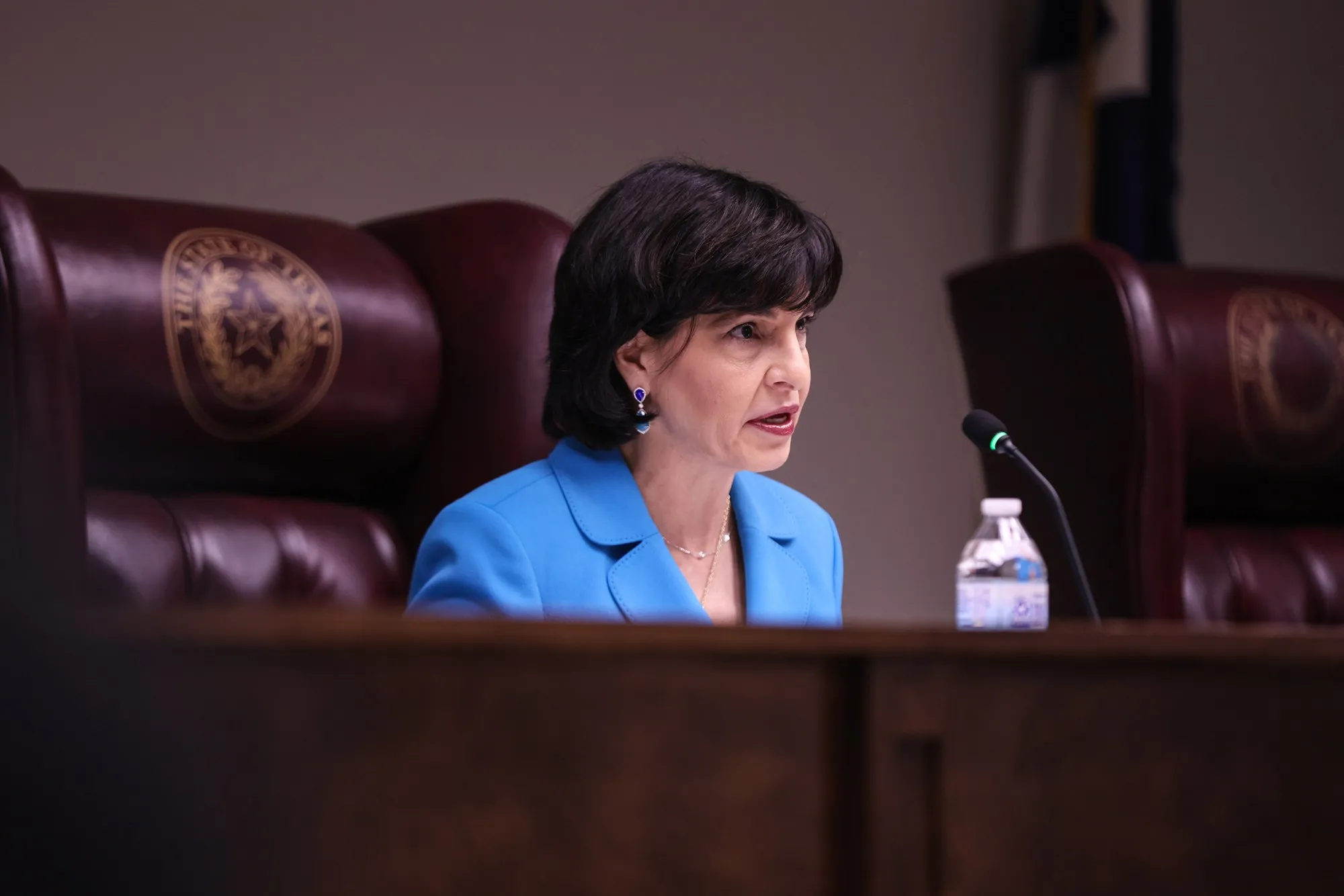
But the day following Darby’s comments, after hearing Exxon Mobil hadn’t talked with the community since the residents hired lawyers, Railroad Commission Chair Christi Craddick scolded Exxon Mobil for not supporting residents enough. Some people from Cheek had taken a bus to be there to voice their concern.
“Give them information,” she said. “Be there for their safety. Give ’em a fire truck if that’s what they want.”
Then Craddick voted for the permit.
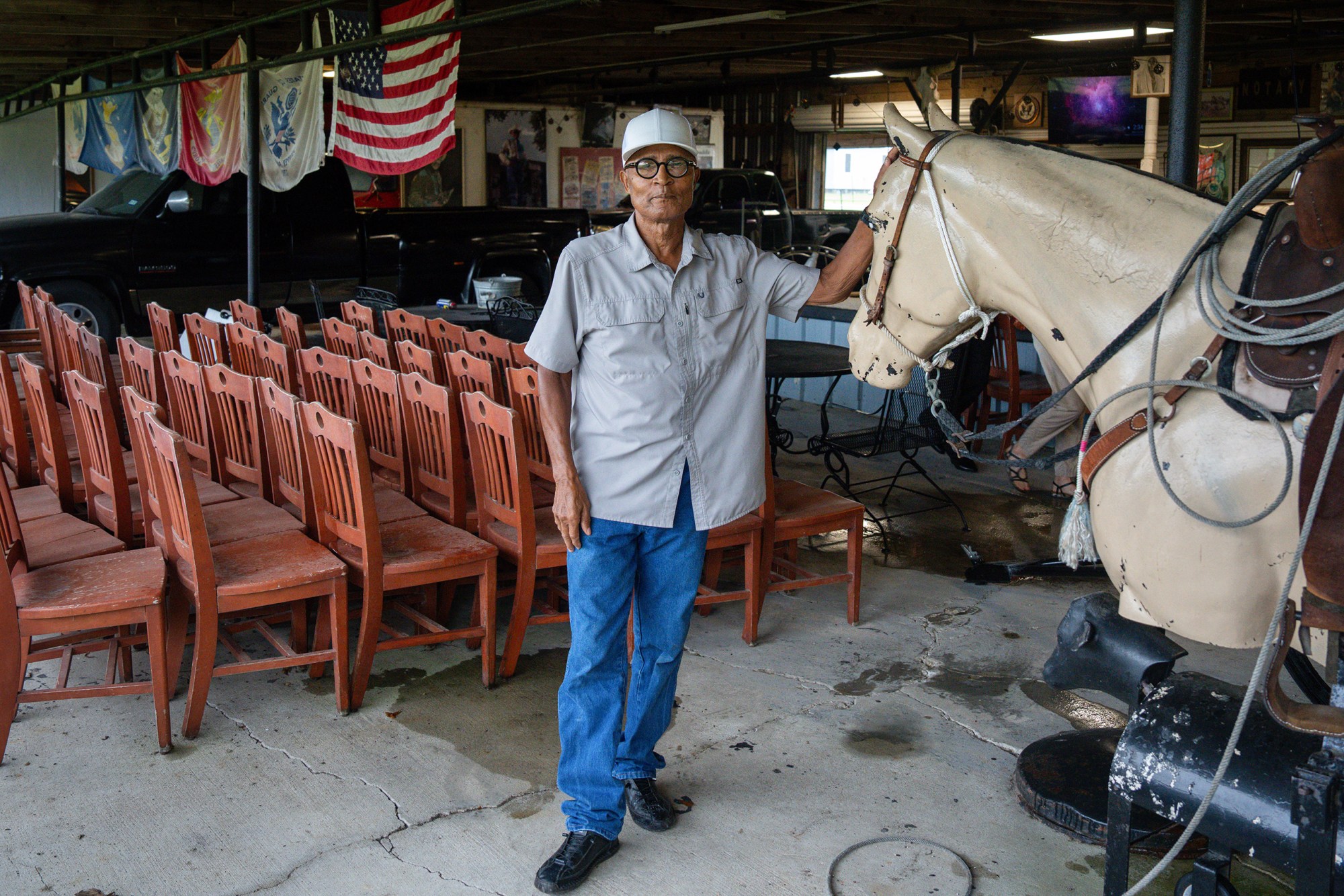
Photos and posters about the area’s decades-long history hosting local rodeos hang in 81-year-old Preston Frank’s self-made museum in Cheek. Like many who live here, Frank, an upholsterer, inherited the land from his family. He considers it an important way to build generational wealth.
“That’s the reason why we’ve been fighting Exxon Mobil,” he said. “We don’t want them coming in here and diminishing the value of the land.”
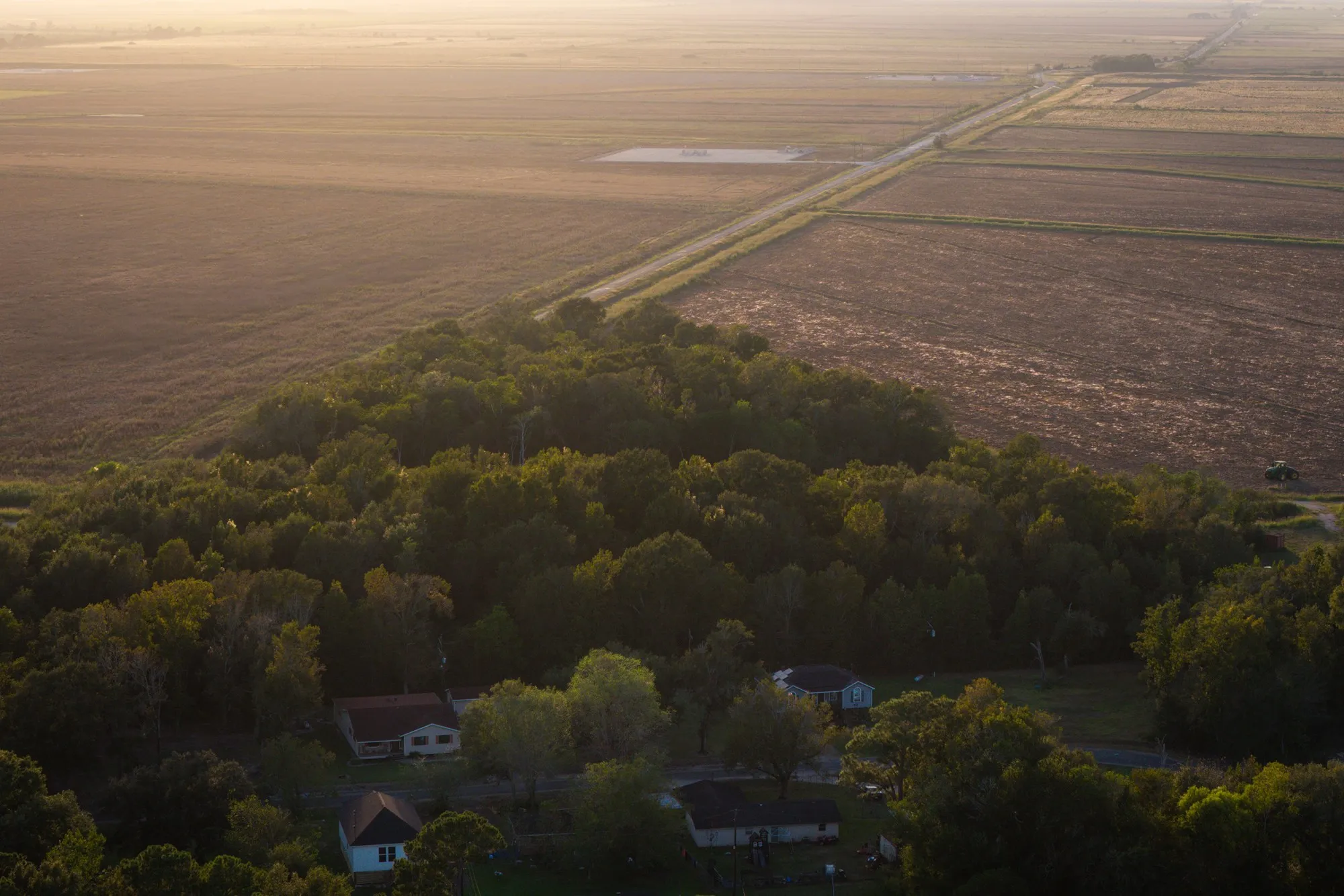
Just west of Beaumont off Interstate 10, the unincorporated community of Cheek is split by the highway and railroad, with many homes sitting on large tracts of land dotted with cattle and horses. People wave to each other. On the north side, there’s a Catholic and a Baptist church. Once a year, residents gather for a community picnic at the park.
 ” data-credit=”Jon Shapley for The Texas Tribune”>
Jon Shapley for The Texas Tribune
Exxon Mobil plans to compress carbon dioxide into an “almost liquid state,” pump it thousands of feet deep into the Earth and let it flow into little spaces in the rock, where scientists expect some to dissolve into salty water in those spaces or get stuck like a drink spilled in sand. Residents from the start had concerns.
How does Exxon Mobil know where the molecules will go? What if they don’t behave as expected? What if the project gets abandoned?
Carbon dioxide leaking into water could increase its acidity and cause metals to contaminate it, according to advocacy groups and experts. If it leaks back into the air or a pipeline ruptures and people are caught in a big enough plume, they won’t be able to breathe or run gas-powered cars to escape.
“Contamination of drinking water with CO2, or with metals or chemicals leaching out of rock due to CO2 acidification of the water, could be very costly if the affected aquifer is used by a lot of people,” Lawrence Berkeley National Laboratory researchers wrote in a 2007 paper. “[O]nce any aquifer is contaminated, it will remain so.”
 ” data-credit=”Jon Shapley for The Texas Tribune”>
Jon Shapley for The Texas Tribune
The Cheek Texas Community Association signed on in July 2025 with attorneys at the nonprofit Earthjustice, which charges no cost. They fought the permit approval all the way to a state administrative hearing in March this year where they argued Exxon Mobil hadn’t done enough to adequately ensure water and public safety would be protected and wasn’t monitoring a large enough area underground.
“It’s the first one in an area so close to a community, and that’s why the water issues and the safety issues are so paramount here,” said Jen Powis, who leads Earthjustice’s Gulf regional office.
The project also raised familiar concerns over environmental justice, a term used by researchers who have shown communities of color suffer a greater proportion of environmental harm than whiter, wealthier areas. Residents feared Exxon Mobil saw in their homes a place where the company could more easily and cheaply push a project through.
The company already built three unassuming injection wells at the edge of the community. Only some residents in Cheek signed so-called pore space agreements with Exxon Mobil for use of the small pockets in underground rock where the carbon dioxide will be stored and that property owners control under current case law.
 ” data-credit=”Jon Shapley for The Texas Tribune”>
Jon Shapley for The Texas Tribune
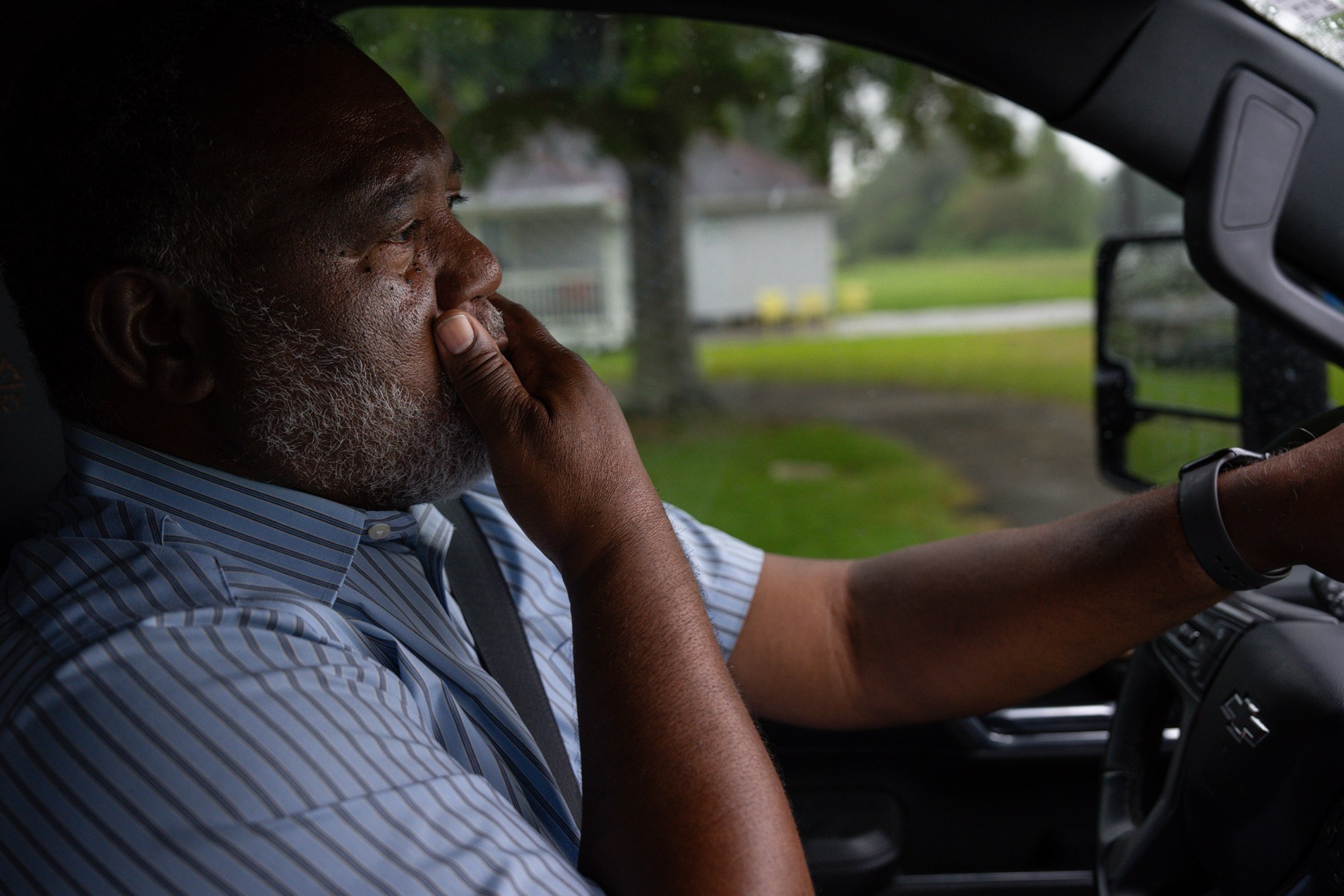
“I’m just thinking they found an area where they can do it and not expect a lot of resistance,” said James Strambler, 70, a former IBM technician who moved there around 2017.
After the March hearing, a technical examiner and administrative law judge recommended moving the permit forward to the commission for a vote.
State gains power
Texas’ work to win the authority to permit carbon storage wells dates back more than a decade.
In 2009, Texas lawmakers passed a law authorizing the railroad commission to design a framework for how the state would regulate these projects in a way that upheld federal law. In 2022, the state formally applied to the Environmental Protection Agency for that authority.
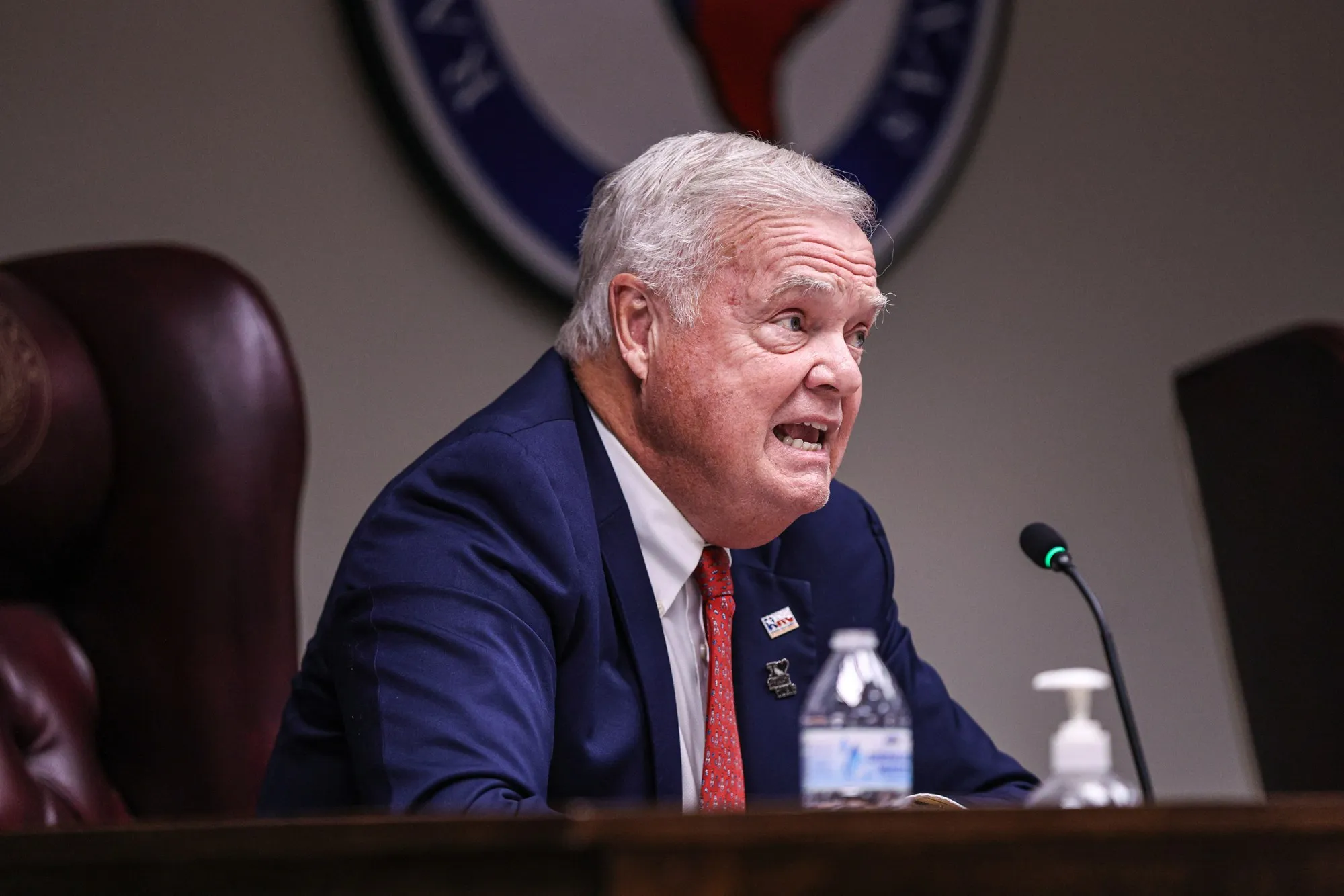
At a virtual July 2025 hearing held by the EPA, the Texas Oil and Gas Association, a trade group representing 90 percent of the state’s fossil fuel production, said approving carbon capture and injection would be an economic boom for the state.
 ” data-credit=”Jacob Lujan / The Texas Tribune”>
Jacob Lujan / The Texas Tribune
Gaining permitting power for carbon storage wells was “essential for our state’s economic future and energy leadership,” said Todd Staples, the group’s president, following the hearing.
Supporters of the technology are quick to point out that carbon dioxide makes sodas fizzy and creates the tunnels of fog that Texas football teams run through. They cite a study done by Texas A&M researchers that found the danger of leaks presents “a low probability of occurrence” — a risk that can be monitored and managed.
Advocates also point to the state’s decades-long history of injecting carbon dioxide into wells under a different type of permit as a way to draw more oil out of the ground and also store some of the greenhouse gas, a process known as enhanced oil recovery, which Exxon Mobil has pursued for decades.
“This has been put in place now for over 50 years,” said Scott Castleman, a spokesperson for the Gulf Coast Carbon Capture and Storage Alliance, which represents Calpine, Chevron, and Exxon Mobil. “Certainly, there is more discussion and opportunity for this industry to scale, and so that’s where you’re starting to see projects and interest in areas that may not have seen this before.”
 ” data-credit=”Jon Shapley for The Texas Tribune”>
Jon Shapley for The Texas Tribune
Establishing community trust will “make or break” projects as the industry grows, said Sophia Cunningham, executive director of the Houston Energy Transition Initiative at the Greater Houston Partnership. Best practices include engaging the community early and providing different, meaningful ways for people to give input and discuss possible benefits.
“It’s a technology that can reduce emissions associated with our industrial activities, and so that is a good pursuit and it’s important to support that,” Cunningham said.“But it’s also reasonable to expect that not everybody in a community is going to want that.”
Residents near projects should be asking whether there would be a helpline to call for any issues, or whether truck drivers would observe weight limits for roads and bridges, said Susan Hovorka, a research professor at the University of Texas at Austin’s Bureau of Economic Geology. In Hovorka’s mind, research and experience have already proven the technology to be safe.
“It’s not utterly without peril, and so people are not foolish to ask,” Hovorka said,“But … their anxiety is sometimes maybe higher than is practical and realistic.”
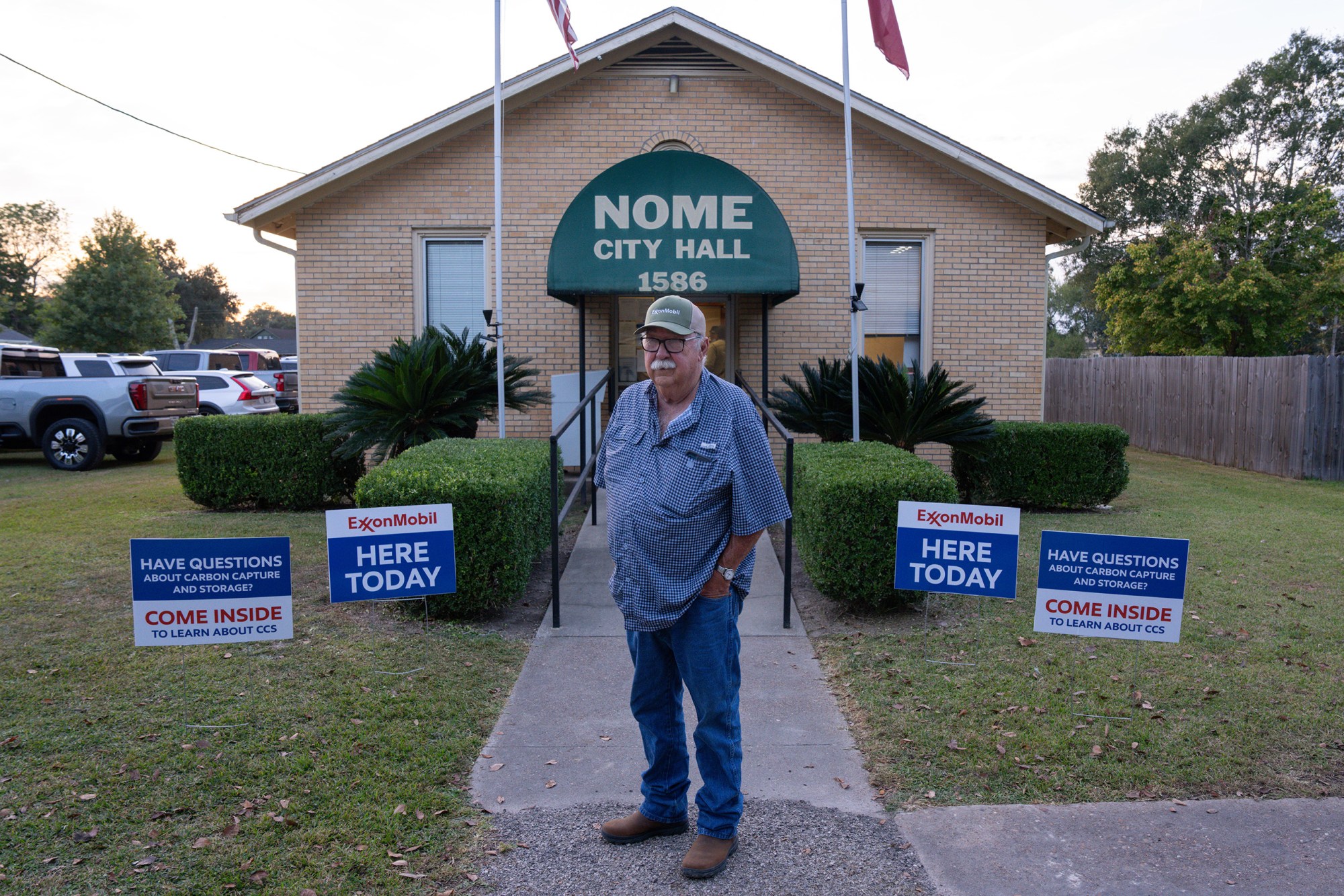
Nome Mayor Kerry Abney poses for a portrait outside City Hall in Nome.
Jon Shapley for The Texas Tribune
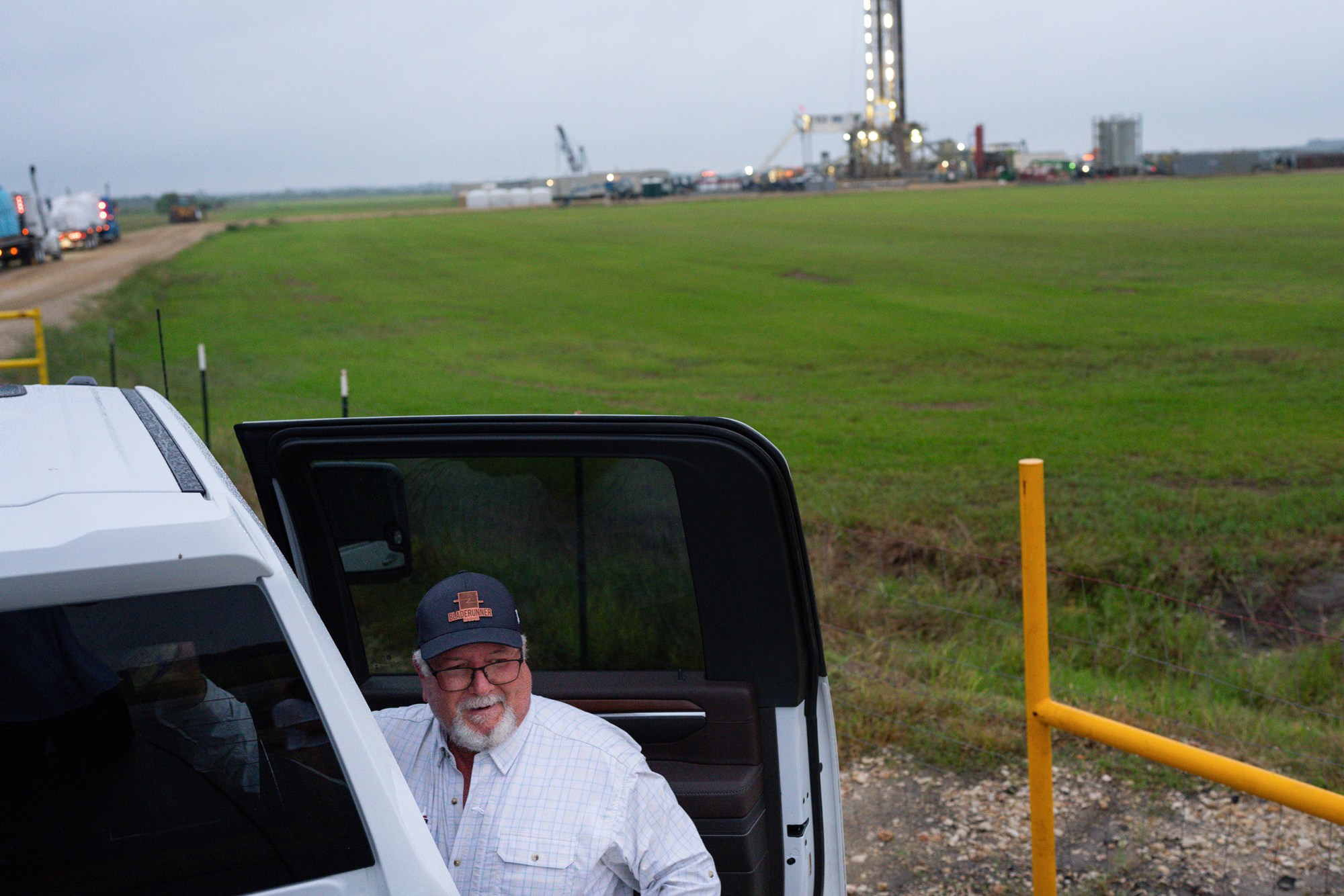
Mike Doguet visits the site of an injection well being drilled across the street from his home near Nome. The site is part of Exxon Mobil’s Sunflower project, which still needs final regulatory approval.
Jon Shapley for The Texas Tribune
But there have been serious incidents in other parts of the U.S.
In Mississippi, a carbon dioxide pipeline ruptured in 2020 after heavy rain caused a landslide, releasing a vapor cloud of CO2. A government investigation found that first responders had not been notified about the safety risks and “had to guess” what they were. Dozens of people went to the hospital.
Injected fluid at another facility in Illinois leaked into “unauthorized zones” underground, which most residents learned about in a news article.
Louisiana Governor Jeff Landry paused the state’s review of new applications to ensure any permit issued would be in compliance with state regulations, citing a need for a review process that considers “the safety of our citizens and environment and that streamlines the process for greater efficiency.” Louisiana has permitted three carbon dioxide wells to be constructed so far but not to begin operating.
 ” data-credit=”Jon Shapley for The Texas Tribune”>
Jon Shapley for The Texas Tribune
In other states with permitting authority as of mid-October, Arizona hasn’t permitted any carbon injection wells. North Dakota has approved eight active injection wells across three projects, and Wyoming has approved five wells in one project.
“The benefit isn’t there,” said Naomi Yoder, an environmental researcher who opposed Texas’ bid to regulate the technology and raised concerns about potential harm to the environment and communities. “So it doesn’t make any risk worth it, and there is risk involved. You can’t possibly sequester enough carbon dioxide to make it worth it.”
Can Texas improve?
In the Texas state hearing in September, the day before Exxon Mobil’s Cheek permit won initial approval, Darby reiterated the importance of supporting the industry. Virginia Palacios, executive director of the agency watchdog group Commission Shift, told him they should also ensure companies pay for equipment and training for emergency responders.
Meanwhile, Railroad Commissioner Wayne Christian has vehemently opposed these projects. Christian has argued carbon dioxide is good for plants, rather than acknowledging the robust science that shows burning fossil fuels has caused carbon dioxide concentrations in the atmosphere to rise, driving up global temperatures.
He voted against Exxon Mobil’s permit, saying he didn’t think it was safe.
 ” data-credit=”Jon Shapley for The Texas Tribune”>
Jon Shapley for The Texas Tribune
Newly elected Railroad Commissioner Jon Rosenthal, who will join Craddick and Christian on the three-person commission, told Inside Climate News he supported the state taking over regulation of the wells.
Some projects have meanwhile stalled. Oxy said in its latest earnings call in August that its carbon storage project — the first and only other one approved in the state so far — was coming online “as we look forward.”
Other projects are moving forward, including Exxon Mobil’s second project near a community not far from Cheek, called Nome. The commission is collecting public comment on that project this week at hearings on Monday and Tuesday. Exxon Mobil named this one “Sunflower,” fitting with the Cheek project called “Rose.”
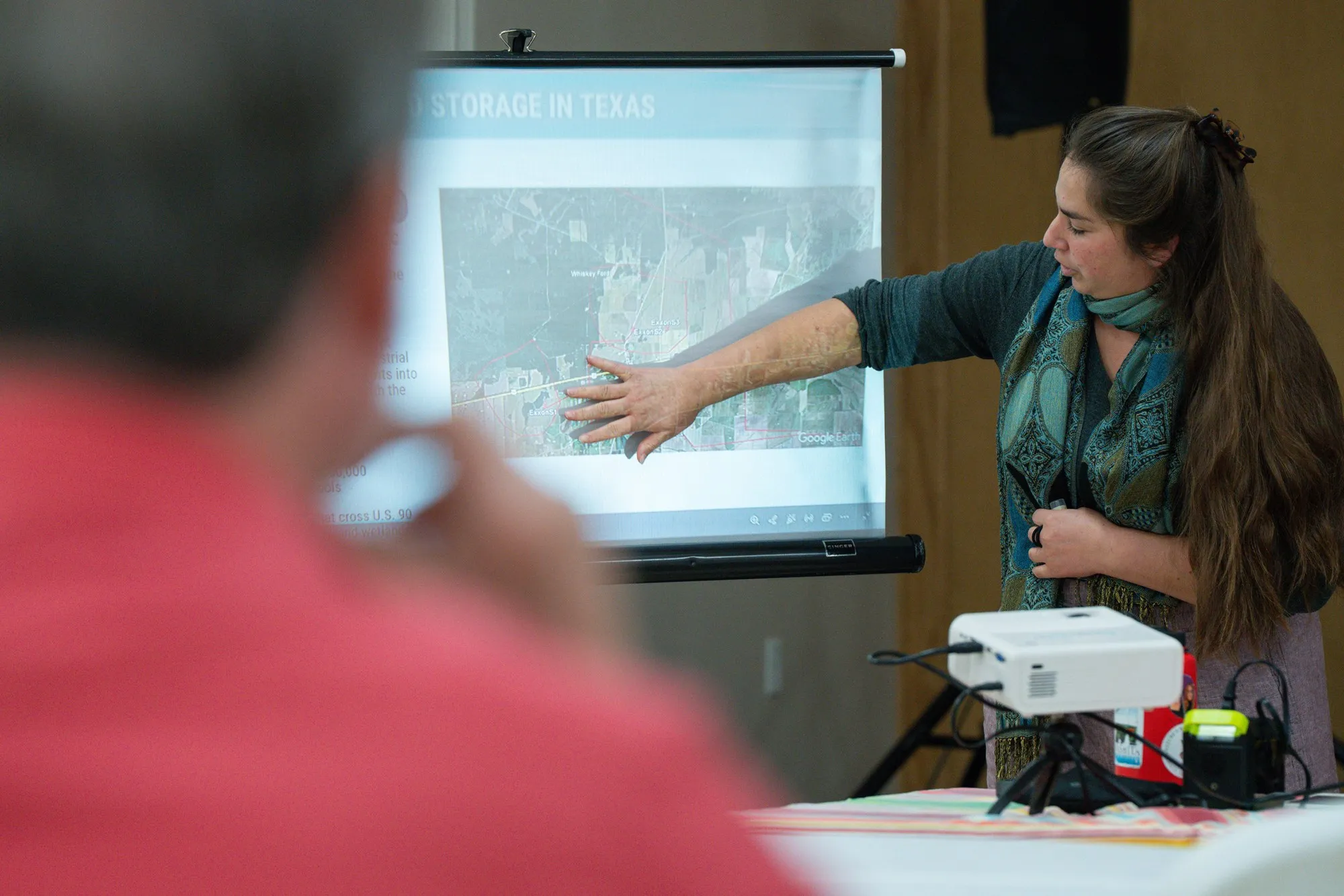
In late October, environmental and community advocates knocked on residents’ doors to invite them to a meeting about how to advocate for themselves. Only one person from the project’s area attended. Several arrived from Cheek, lending advice on what they’d learned while attendees ate pasta and salad.
The meeting hosts characterized the technology as a financial boon to industry and the Railroad Commission while putting drinking water at risk. The colorless, odorless gas can also cause suffocation, presenter Alexis Iwasiw warned the group.
“At high concentrations … it can lead to serious injury or death,” she said.
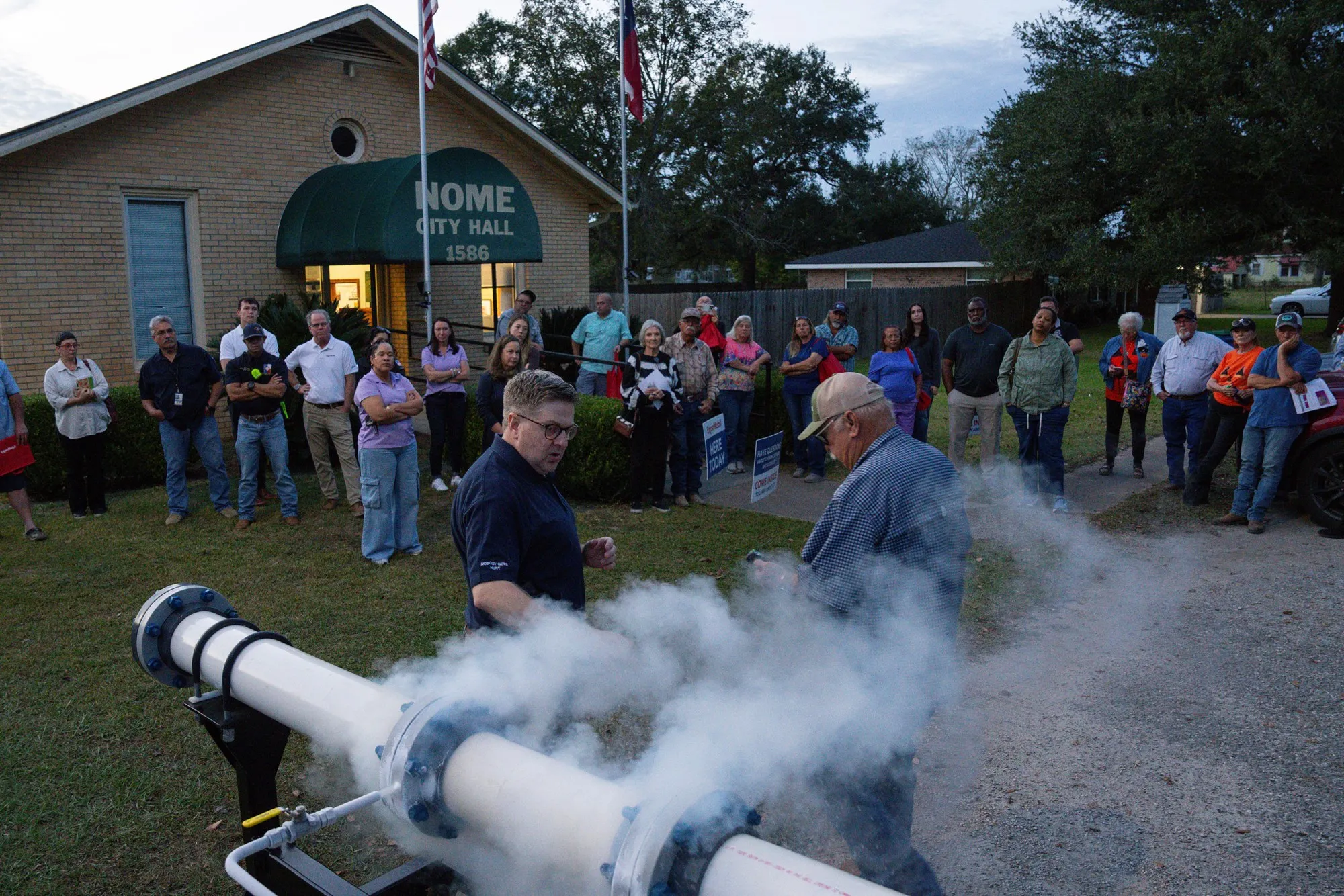
The next night, Exxon Mobil held an open house in the small Nome City Hall. They served boudin balls and shrimp and offered colorful pamphlets about the company’s safety record, how to respond in an emergency and how drinking water would be protected. They displayed a poster of other pipelines in the area.
As the sun went down, the group of several dozen made its way outside, where the Exxon Mobil presenters enthusiastically launched into explaining how CO2 is safe at certain levels. With a call of “let it rip, tater chip,” they released the gas from a demonstration pipeline, where it puffed out visibly like white smoke.
Mike Doguet, a 72-year-old rice and turf farmer-turned real estate developer, looked on. He believed the company did a much better job communicating with residents in advance here than in Cheek. The company is paying for new firefighting equipment, he said, among other community support. (Cheek community leaders have a list of wants, too, including improved roads, a community center, and an emergency warning system.)
One of the Sunflower project’s injection wells sits across the street from Doguet’s home in Nome, making neighbors wonder if there was oil. Doguet’s daughter lives next door and his son isn’t far. He wasn’t worried about safety.
“In my mind, it’s going to encourage new industry. It’s going to be good for the environment. It’s all positive to me,” Doguet said. “I don’t see the negatives.”
As the presentation went on, a resident from Cheek peppered the Exxon Mobil employees with questions. One of the Exxon Mobil presenters snapped back, telling her they were in the business of keeping substances in pipelines and would always err on the side of safety.
A former Exxon Mobil employee and Nome resident in the crowd, 77-year-old Lawrence Riley, piped up to say that in his decades of experience, he’d never had a pipeline emergency: “They are very, very safe, I am telling you,” he said.
Wearing an Exxon Mobil hat, 71-year-old Mayor Kerry Abney at one point walked through the CO2 cloud. He thought the project was great: Workers were shopping at Big D’s in town, contributing to sales tax, he said. People had a chance to make money in a place where agriculture is tough.
As Abney put it in an interview: “Santa Claus came.”
The Cheek resident watching the plume crossed her arms, looking skeptical.
Carlos Nogueras Ramos and Zach Leggio contributed reporting.
Disclosure: The University of Texas at Austin has been a major financial supporter of The Texas Tribune. Environmental Defense Fund, Greater Houston Partnership, and IBM have been financial supporters within the past five years. The Texas Tribune is a nonprofit, nonpartisan news organization that is funded in part by donations from members, foundations, and corporate sponsors. Financial supporters play no role in our journalism. Find a complete list of them and more information about our financial and disclosure policies here.