











Flesh Impact, a term coined by Billy Wilder to describe Marilyn Monroe’s relatable sex appeal, gives the screen icon a chance to speak as a centenarian. Written and directed by Maggie Gyllenhaal, the short stars Ellen Burstyn as an older Monroe, with Dakota Johnson appearing in flashbacks to her youth. When she arrives to audition for Tennessee Williams’ Orpheus Descending Monroe reflects on the industry’s highs and lows, from a young actress’s early dreams to the toll of misogyny on a woman’s mental health. Gyllenhaal talks to Deadline about her latest project behind the camera.
DEADLINE: Where did the idea to set Marilyn Monroe’s life at 100 years old come from? What was important for you in telling the story that way instead of focusing on her youth?
MAGGIE GYLLENHAAL: I was commissioned to make this and the people who funded it [South Korean luxury car brand, Genesis] came to me and said, “Will you make a film about Marilyn Monroe to celebrate her 100th birthday, to honor her? And could you have her act in a way she didn’t have the opportunity to act when she was alive?”
Watch on Deadline
So, I thought, “I don’t know that much about Marilyn Monroe.” I know as much as anyone who’s been alive in America knows about her. I’ve seen the posters and a few films, but I wasn’t an expert. I thought, “I don’t know if I’m the woman for this job. I have to see if there’s a real connection for me with this topic. Is there something I need to express or think through? Otherwise, someone else should do it.” I gave myself a weekend to see what came to mind, and what came to mind was her at 100. I thought, “Ooh, that’s good.”
To be honest, I was in post production on The Bride!, so there was some overlap with the idea of someone coming back from the dead with more to say than she was able to articulate when she was alive. That’s thematically in the same language as The Bride! It came to me, and I thought, “They’re never going to like this. They’re going to want beautiful young Marilyn in her white dress. This is not what they want.” I thought, “Fine. If they don’t want it, someone else should do it.” But they did want it. They said, “Not only do we want it, just go wherever you want.” Then we had to do it really quickly. I wrote it in two weeks, and we put it together and shot it really quickly.
DEADLINE: When it came to casting, what was the conversation about reaching out to Ellen Burstyn? She’s not yet 100, but surely she has her own stories from being in this industry for so long. And then there’s Dakota Johnson too. Talk to me about the casting process.
GYLLENHAAL: As I started making it with these women, I realized the movie is as much about Marilyn Monroe as it is about Ellen Burstyn, Dakota Johnson and even me. It became a piece about being an actress, which is something I haven’t done in probably eight years. When I stopped acting and started writing and directing, I kind of never looked back. I didn’t realize that’s exactly what I was writing about, and I started to understand it as we were making the film.
What works so beautifully about Ellen, whose work I think is incredible here, is that she’s so formidable. At 93, almost 94, she has never stopped working. By working, I mean learning, exploring, being curious and trying things she’s not sure she can do. She’s a powerhouse, an incredible artist. It makes me sad because it’s the opposite of what Marilyn Monroe was allowed to do. Marilyn Monroe died at 36. You see this kind of “What if?” What if this mind, this woman, this body could have had another 50 or 60 years?
I was really lucky. I went to the actresses I wanted, and that was Ellen and Dakota.
DEADLINE: You’ve worked with Dakota before. You know her.
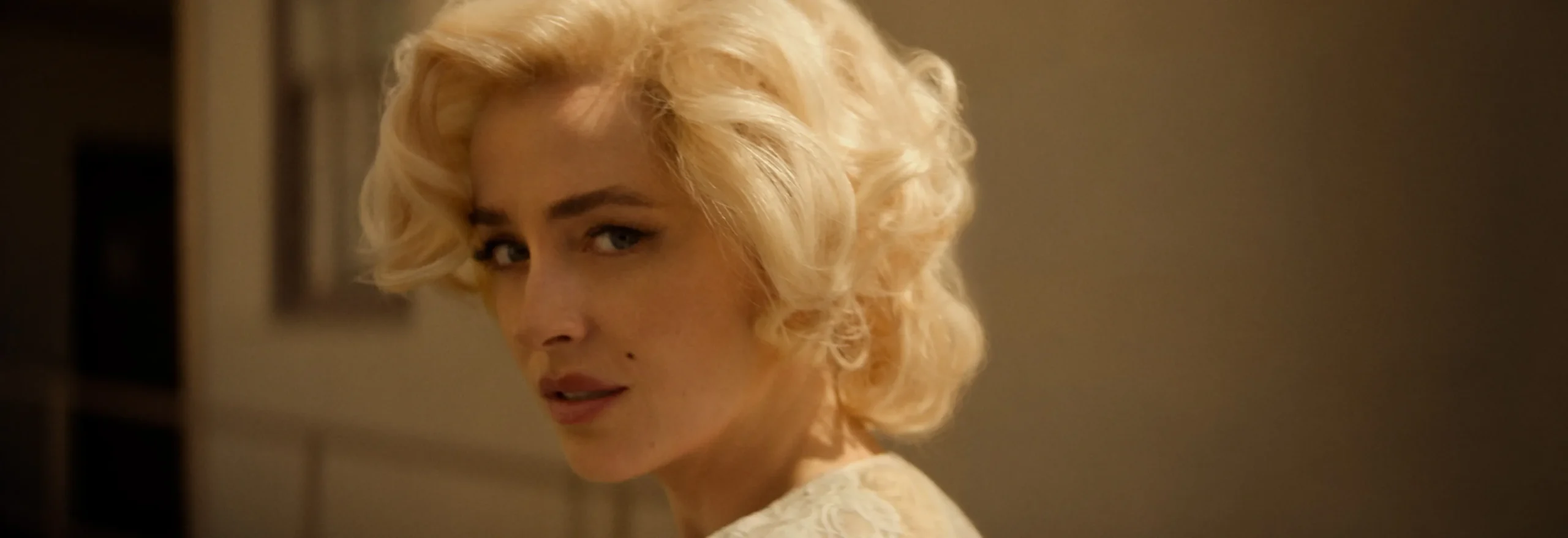
GYLLENHAAL: I know her from The Lost Daughter. I love Dakota. I think she’s really brilliant. At first, I thought, “Wow, she doesn’t look enough like her. Maybe that will be distracting because Marilyn is so widely known.” But then I realized, if you stop for a second and think about what Marilyn Monroe looks like, she’s been so commodified, so Xeroxed. I can’t even totally picture her. What’s more important here is what’s happening inside. I think Dakota has a real connection. I can see Marilyn and Dakota in the same conversation in their hearts.
DEADLINE: What did you learn from working with Ellen Burstyn? How do you direct Ellen Burstyn in a project like this?
GYLLENHAAL: I have so much respect for her. I could have gotten shy or scared or overly referential, but I didn’t. I thought, “She’s an actress. I know a lot about that.”
It turns out Ellen is part of the Actors Studio. She’s its president. That’s basically the Method. The Method isn’t having people call you by your character’s name or acting like an asshole if your character is an asshole. That’s not the Method. It means bringing your own experience, your own mind and your own heart into the fiction of the story you’re telling. That’s all it is.
Ellen was trained in the Method, and so was I, and so was Marilyn. The language I use to think about acting or work with actresses is very similar to what she uses, thinks and values. We were really on the same page. It was nice.
DEADLINE: Thinking about your own journey as an actor and making this shift, it’s really cool to see you behind the camera, writing and directing The Lost Daughter, The Bride! and Flesh Impact. It feels like there’s something you’re trying to get at with these complicated women. What’s your throughline as a writer and director?
GYLLENHAAL: I don’t think I have a modus operandi. Of course I’m interested in women. I am one. So many women we’ve seen throughout history in movies have been played by fabulous actresses who brought their experience and themselves to the work. That makes it easier for us to recognize ourselves in the characters we see. But so often, women just don’t have the scope or the spectrum to express all the things we feel. I guess that’s naturally interesting to me. I’m interested in that experience and all its nooks and crannies.
When I see things about my own experience expressed in a way I’ve never seen before, it feels comforting. Even if they’re dark things, I think, “Oh, I’m not alone in this.” I like that. I also think I can only work on things that are at the edge of what’s on my mind, at the edge of what I know about myself or the world. Writing and directing takes a long time, so you have to take on things that make you think, “I know a little bit about this. I’m curious about it, but I need to learn in order to do it.” Otherwise, you’re going to get bored.
DEADLINE: What unexpectedly resonated with you while filming and or writing Flesh Impact?
GYLLENHAAL: Two things. I really ended up responding to a super close-up of Dakota at the end of the movie. She’s finishing the monologue the older actress has come to give in her audition. You see her go from having dropped this persona and really expressing herself, both as an actress and as a person, to picking the persona back up and doing her little Marilyn thing. Then you see her drop it again, all within five seconds at the most.
The other thing is the sequence where you see young Marilyn walking through the set while Ellen is narrating or telling that story. Something lifts off there. The two actresses are the same person. What we’re trying to articulate isn’t literal. It can’t be spelled out in words. Somehow it gets articulated in a way that has a little magic in it. That happens sometimes in movies. I’ve watched the movie a lot. It’s only 17 minutes, and I have all sorts of feelings watching it. When we get to that part, I think, “OK, yes, it coalesced and happened there.” I really felt that in post.
Also, I want to say something before we stop. I was just thinking about all these shorts and they’re really hard to see unless you’re an Academy member. They don’t have distribution. Mine doesn’t, either. It’s not a viable commercial venture. But I’m just starting to watch them on the Oscar Portal, and it’s fascinating to see all these filmmakers. I don’t think we’d have access to so many of them in a longer format. They all have different voices, different ideas and different things they need to express. It is so cool to be able to watch them, and I feel really honored to be part of that group.