

An ancient rodent of extraordinary size has been identified from fossils uncovered in a mine in southern Thailand. The discovery, made by an international team of paleontologists that includes scientists from McGill University, provides new evidence that giant rodents appeared much earlier and in more parts of the world than previously believed.
The researchers found “remarkably large” fossilized teeth belonging to a previously unknown species called Yakamys sirindhornae. This prehistoric rodent lived approximately 34 million years ago, during the middle of the Paleogene period. Its remains, consisting of a lower second molar and a lower incisor, were recovered from the Bang Mark Pit at the Krabi lignite mine in Thailand’s Krabi Province.
Although only two teeth have been identified, they offer valuable clues about rodent gigantism, the evolutionary process through which rodents develop unusually large bodies. The discovery suggests that Southeast Asia played a more significant role in the early evolution of giant rodents than scientists had recognized.
Giant Rodents Have a Much Older History Than Expected
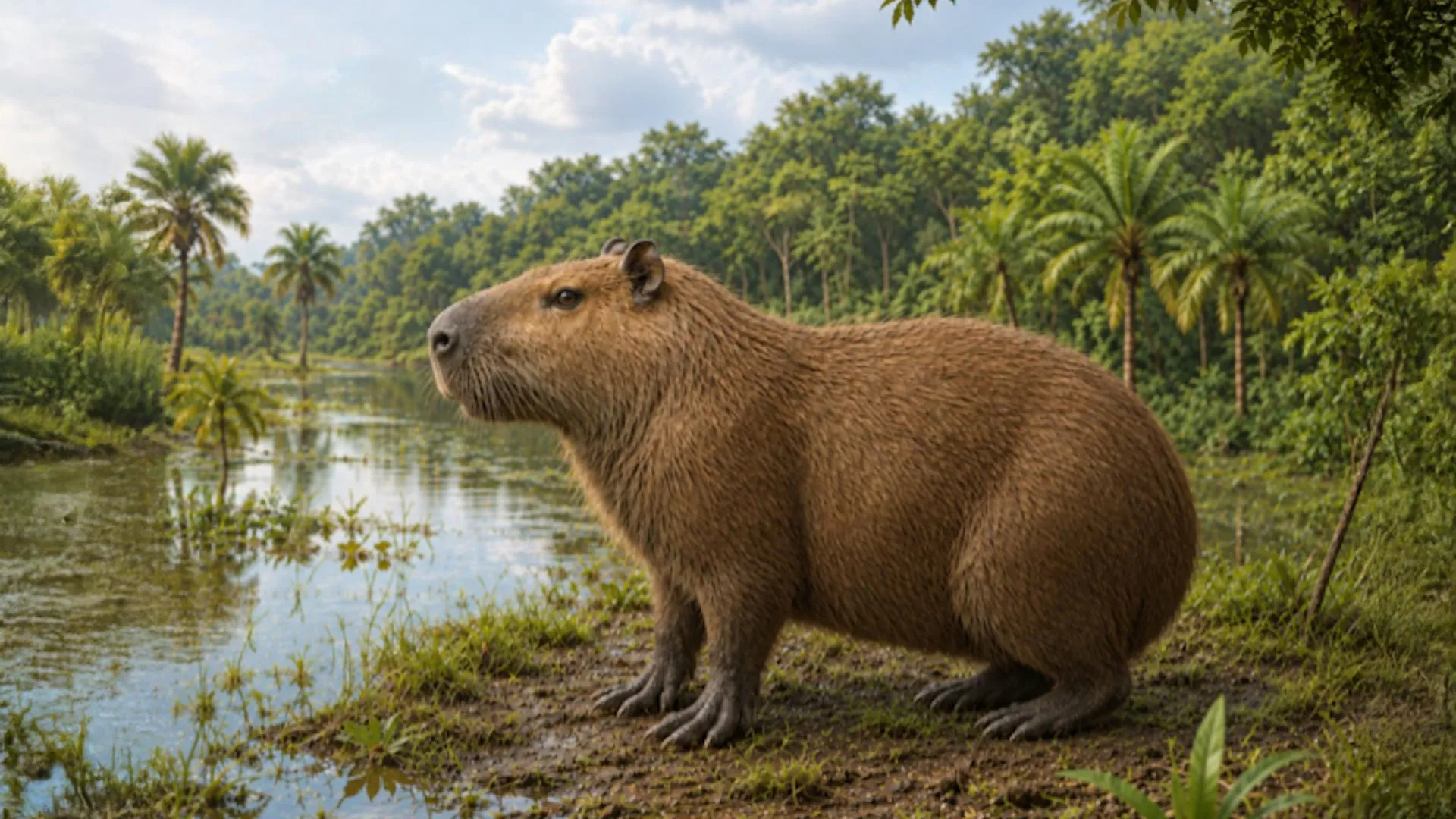
“Today, the largest living rodent is the capybara, but very large rodents are not restricted to recent ecosystems,” said Virginie Millien, a biology professor at McGill University and co-author of the study. “Giant rodents evolved repeatedly during the later history of the group, mostly in South America. This discovery suggests that Southeast Asia also played an important role in the early evolutionary history of large-bodied rodents.”
The newly identified animal’s name reflects both its impressive size and its connection to Thailand. Yakamys combines “yak,” the Thai word for giant, with “mys,” the Greek word for mouse or rat.
The second part of its scientific name recognizes an important supporter of scientific research in Thailand.
“The species name, sirindhornae, honors Princess Maha Chakri Sirindhorn, in recognition of her longstanding support for science and paleontological research in Thailand,” Millien said.
How Big Was This 34-Million-Year-Old Rodent?
To estimate the animal’s size, the research team applied seven established methods that use tooth measurements to calculate body mass. Their results suggest that Yakamys sirindhornae weighed approximately 30 kilograms, making it about twice as heavy as other known rodents from the same period, including Hulgana.
That would have made the newly discovered species exceptionally large compared with its contemporaries. However, the researchers emphasize that determining an extinct animal’s weight from a small number of fossilized teeth involves considerable uncertainty.
“This is only a ballpark figure, as there is substantial uncertainty associated with fossil body-mass estimation,” Millien said.
The limited fossil evidence also makes it difficult to reconstruct how Yakamys evolved or what its life was like. Additional discoveries will be needed to better understand its physical characteristics, ecological role, and evolutionary relationships.
International Research Uncovers Thailand’s Prehistoric Past
The fossils were identified through an ongoing international collaboration investigating ancient mammals in Thailand’s Krabi Basin. The project brings together scientists from McGill University, Thailand’s Department of Mineral Resources, and French research organizations, including CNRS and Université de Poitiers.
By revealing evidence of an unusually large rodent in Southeast Asia 34 million years ago, the discovery expands scientists’ understanding of where and when rodent gigantism emerged. Future fossil finds could help establish how these ancient giants lived and how their evolution relates to the enormous rodents that appeared elsewhere in the world.
The research received support from CNRS, Université de Poitiers, Université de Montpellier, McGill University, and the Department of Mineral Resources of Thailand.