

Expert comment
thilton.drupal
The UK–EU Summit is an opportunity to secure a new partnership suitable for an increasingly hostile global economy. It should start with an information-sharing arrangement about high-risk investments, including from China.
The second UK–EU ‘reset’ summit takes place on 20 November, after a six-month delay to give prime minister Andy Burnham’s new government time to settle in and set its priorities.
It is expected to deliver on the deals kickstarted by the Starmer government, most of which focus on reducing barriers to trade and mobility. These include a sanitary and phytosanitary (SPS) agreement that removes most checks on trade in animals, plants, and their products, as well as a youth experience scheme and the linking of the UK and EU emissions trading systems. Completing these agreements is important for growth – the UK government estimates the SPS deal could eventually be worth £5.1 billion a year – and for building trust with the EU after years of political setbacks.
But the Burnham government will likely also want a more strategic partnership with the EU on security, defence and geopolitics. Central to this should be the goal of economic security, which has become a key priority for governments around the world. Economic security revolves around protecting sensitive national assets from hostile interference or exploitation, withstanding coercion and supply shocks, and building the strategic capabilities needed to stay competitive.
Beyond ‘Made in Europe’
Much of the reporting on this topic has focused on whether UK firms will be covered by the EU’s ‘Made in Europe’ initiatives. These measures – the most significant of which are in the proposed Industrial Accelerator Act – favour European-made products in public procurement and subsidy schemes, with the aim of rebuilding the EU’s industrial base and reducing its strategic dependencies. The concern is that, unless UK-made goods are treated the same as European-made ones, these initiatives risk shutting UK firms out of European supply chains.

For now, the decision over ‘Made in Europe’ appears to have been kicked into next year. But ‘Made in Europe’ is only one part of the picture, albeit a critical one. Since Brexit, the global economy has become far more adversarial. The US is more willing to use tariffs as bargaining chips, while China is restricting exports of critical inputs such as rare earths to advance its geopolitical goals.
In a forthcoming paper, we argue that middle powers such as the UK need to work together to manage these pressures. Partners like Australia, Canada, Japan and South Korea will be critical. But the EU is the UK’s most consequential economic security partner, due to its proximity, integrated supply chains and shared security interests. The UK’s approach to the upcoming summit should therefore put economic security cooperation as a crucial pillar of the reset in UK–EU relations.
Economic security partnership
The UK and the EU share challenges ranging from coercion and Chinese overcapacity to an unpredictable US. They also have shared dependencies in critical minerals, energy and some advanced technologies.
A new UK–EU economic security partnership would give both sides a regular, structured mechanism to share information and coordinate on these risks.
This partnership could build on existing structures. These could include the Partnership Council set up in 2021 under the Trade and Cooperation Agreement, the 2025 Security and Defence Partnership, and the annual UK–EU summits. The partnership would also involve designated channels being established across each government to coordinate information-sharing and policy objectives as part of its structure.
As part of this partnership, the EU and the UK should initiate an annual ministerial dialogue on economic security, supported by official-level working groups. This would compare assessments of geo-economic risks, including from China, and discuss approaches to coercion, industrial policy and overcapacity. It should also consider ways to jointly engage other like-minded partners on trade norms and to address geo-economic shocks, such as the energy price crisis that followed the closure of the Strait of Hormuz.
From the outset, the partnership should also include a commitment to consult on how to respond if either side faces retaliation for measures taken together. This could apply if the UK were to align with EU tariffs or investment conditions on Chinese goods or capital, for example as part of securing ‘Made in Europe’ treatment. In this scenario, the UK should act within an agreed process for managing any consequences. That would give both sides a framework within which to negotiate how to align their economic security.
Start with protective tools
Aligning tariffs and industrial policy is politically and economically challenging. This is partly because the UK and the EU compete in certain industrial sectors and for investment. It’s also because the UK sits outside the trading bloc and cannot currently benefit from the EU’s single market or the Anti-Coercion Instrument (nicknamed the ‘trade bazooka’), its new trade tool aimed at deterring and responding to economic coercion.
Rather than initially seeking this alignment, the partnership should therefore instead begin by strengthening cooperation to address the risks posed by hostile actors acquiring or accessing sensitive assets. These include data, technology and intellectual property.
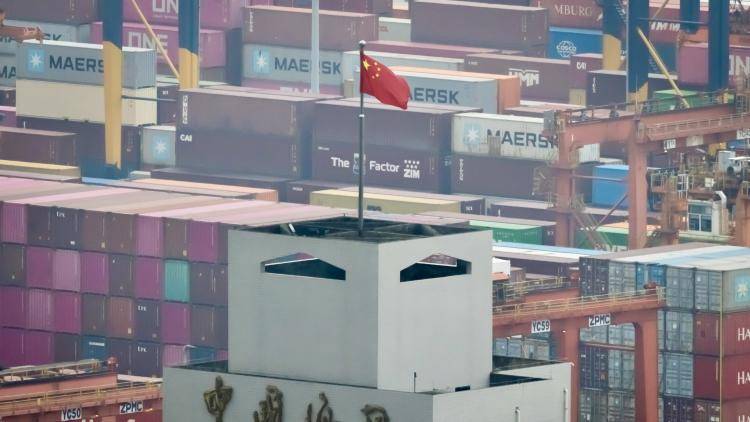
At present, the UK and the EU share too little information on investment risks, research security and vulnerabilities in critical supply chains. Closer cooperation in these areas carries lower political and economic costs than aligning on tariffs. And it plays to the UK’s strengths.
The UK’s National Security and Investment Act (NSIA) is one of the more developed screening regimes in Europe, while the EU only recently made it mandatory for all member states to screen investments for national security risks. A practical first step would be an information-sharing arrangement between the UK’s Investment Security Unit and EU member states’ screening authorities. This would also help address concerns on both sides about high-risk investments, including those from China.
Over time, this would make it easier to share sensitive technology, capital and research. It would help build the trust needed for harder decisions on industrial policy and trade defence.
A more ambitious agenda
Once that trust is established, the partnership should pursue a more ambitious agenda. First, this should build on the information-sharing set out above to establish a joint early warning arrangement for supply-chain disruption as soon as possible, modelled on the aims of the US-Japan-South Korea system, connecting the UK’s Supply Chain Centre with the EU’s monitoring of critical goods.
Over the next two years, it should also include a channel for coordinating responses to coercion, including how the UK’s emerging anti-coercion framework could work alongside the EU’s Anti-Coercion Instrument. And it should foster strategic industrial collaboration over the long term, including pooling resources and talent.
However, while political will is growing on both sides, cooperation on economic security still faces challenges. The EU is wary of extending subsidy and procurement benefits without commitments that ensure reciprocal access to UK schemes and alignment on tariffs and investment conditions towards China. For its part, the UK will resist overt rule-taking or limits on its freedom to set its own trade policy.
The best way to begin addressing some of these challenges is to start with information-sharing, which asks less of either side than full alignment. It would start to answer EU concerns about Chinese investment and build the trust both sides need for harder decisions later.
The effort is worth it. Despite Brexit, the UK’s long-term economic future ultimately remains closely tied to Europe’s.
This is particularly true when it comes to shared economic security. A forward-looking UK–EU economic security partnership would help protect both economies from coercion and supply shocks, strengthening the industries that both will depend on while navigating an increasingly hostile global economy.