

Walking into your classroom and realizing you’re down one—or two—paraprofessionals is a feeling every special education teacher knows too well. Suddenly, the carefully orchestrated small-group rotations, 1:1 supports, and data collection plans go out the window. Being able to pull up behavior strategies ahead of students arriving is vital.
When adult-to-student ratios drop, behavior challenges often spike—not because students are trying to be difficult, but because predictability and immediate support just disappeared. On days when you are operating in survival mode, your goal shifts from introducing brand-new, complex concepts to maintaining safety, predictability, and emotional regulation.
Here are five practical, low-prep behavior strategies to keep your classroom calm and functional when you are short-staffed.
Prioritize Reinforcing & Independent Activities
When you don’t have enough adults to run direct-instruction centers or groups, introducing new academic content often leads to frustration and behavioral escalations. Instead, temporarily restructure your rotations around tasks students can complete independently with a high rate of success.
Hold off on introducing brand-new, multi-step concepts until you have your full support team back. High success rates build momentum and drastically reduce escape-maintained behaviors.
Ideal choices for these tasks:
- Lean into mastered skills: Pull out familiar file-folder tasks, independent work boxes, or preferred review games.
- Use Interactive Books: Interactive or adapted books are a great way to continue working on reading and theme concepts without having to be sitting right next to students. This allows you to continue moving around and monitoring the classroom.

- Pull out fine motor tasks: Fine motor tasks are great for keeping students with short attention spans busy and on task. Check out this blog post for a list of ideas!
Increase the Rate of Non-Contingent Reinforcement (NCR)
When staff numbers are low, adults naturally spend more time putting out fires and less time giving positive attention. Students who seek connection or validation may quickly escalate their behavior just to get a few seconds of your focus. Nip this in the bud by delivering quick, frequent bursts of praise, high-fives, or tokens every few minutes just for staying on task or sitting calmly.
Front-load connection by spending the first one to two minutes of a transition checking in with your students who typically struggle most without 1:1 support. Filling their attention bucket early prevents behavioral detours later.
Lean Heavily on Visuals to Do the Talking
Every time you have to give a verbal prompt across the room, you lose momentum—and for many of our students, rapid-fire verbal directions increase cognitive overload and trigger shutdowns or pushback. This can also be upsetting for students you aren’t giving the verbal prompts and directions to. It creates a lot of noise without enough calming quietness.
Instead of verbal prompting:
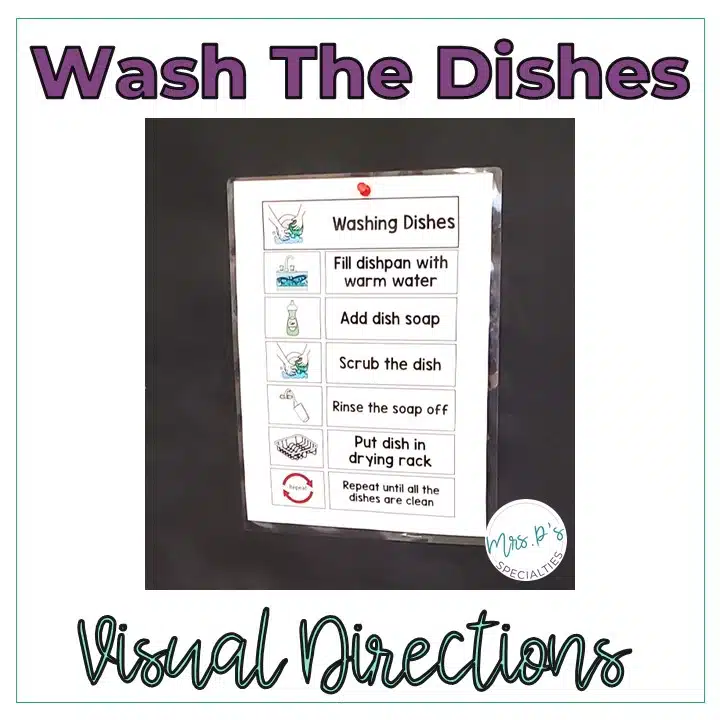
- Point, don’t lecture or nag: Use individual first-then boards, work for cards, visual schedules, and desk cues. Silently pointing to a visual cue preserves your energy, keeps the room quiet, and reduces power struggles.
- Use visuals to modify, adapt, and instruct. Need tips on how to do this? Check out this blog post!
- Use visual timers in a variety of ways: Visual timers help students know how much time is left in an activity or how long until an activity they are looking forward to. Use visual timers or pull one up online.
Simplify Transitions & Build in Movement Breaks
Transitions are the prime time for behavioral breakdowns, especially when you don’t have extra adults stationed at the door, the hallway, and the cubbies. Here are some ways to manage transitions when you are short-staffed:
- Batch your transitions: Instead of moving the whole class at once, dismiss or cash in students in small waves of two or three based on shirt color, table group, or readiness.
- Schedule proactive sensory breaks: Don’t wait until students are dysregulated to offer a break. Build a 3-minute whole-group movement video, heavy-work job (like carrying a stack of books to the office), or quiet tabletop sensory bin into your schedule right before your hardest blocks of the day. When you don’t have enough staff, doubling the number of sensory breaks you usually have in your schedule is one of the easiest behavior strategies to keep everyone regulated.
Triage Your Demands & Pick Your Battles
On a fully staffed day, you might hold firm on every single expectation—from pencil grip to sitting with feet flat on the floor. On a short-staffed day, rigid enforcement of minor rules can spark major meltdowns that tie up the only adult in the room.
- Separate “non-negotiables” from “nice-to-haves”: Safety, kindness, and staying in the designated area are non-negotiables. Whether a student completes five math problems instead of ten, or chooses to stand while working at their desk, can wait for another day. If your student wants to stand
- Compromises are going to happen. For example, if your student wants to stand while working at his desk, but you think it will lead to elopement, behaviors, etc., then give him a hula hoop to put next to his desk. The compromise is that he can stand, but he needs to stay within the hoop. This is a great way to set a boundary and a visual to help him be successful.
- Offer controlled choices: Give students autonomy within safe boundaries (“Do you want to start with the blue worksheet or the yellow worksheet?” or “Do you want to work at the kidney table or your desk?”). Choice lowers anxiety and gives students a sense of control when the classroom routine feels off.
Bonus tip: After you’ve caught your breath at the end of the day, take a couple of minutes to reflect on what worked and what didn’t. Are there some visuals that would have been helpful to have when you are short staffed? Did you wish you had a couple of prepped activities or file folders available? Jot your thoughts down and work on being more prepared for the next time your staff is out.
Lastly… Give yourself grace!
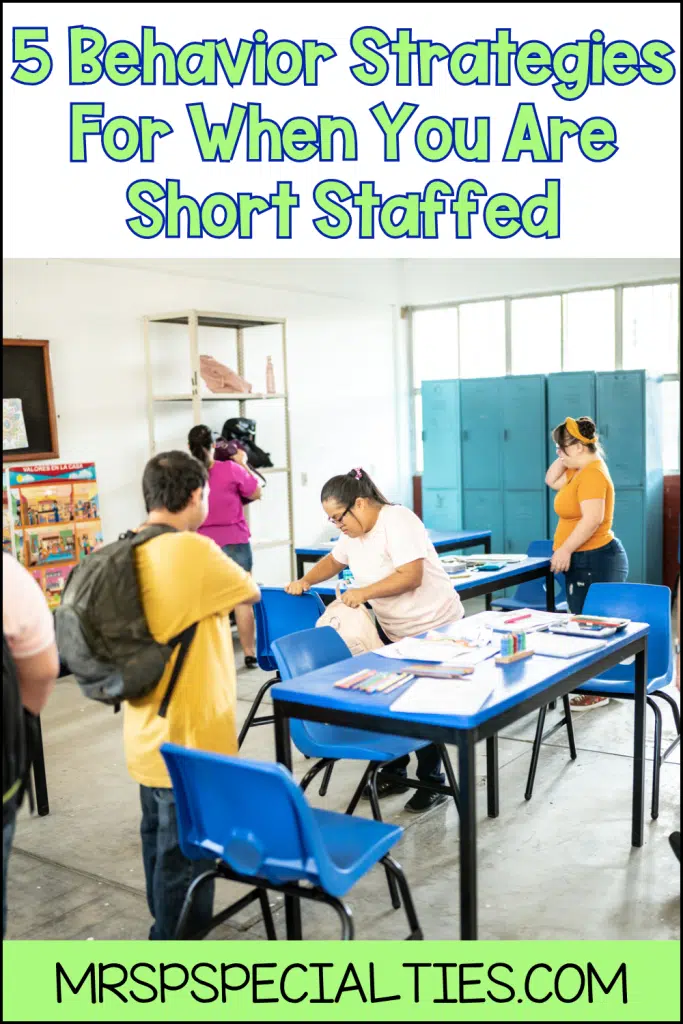
Being short-staffed is exhausting, and it’s completely okay if your lesson plans look different on those days. By lowering the friction in your environment, leaning on visual supports, and relying on proactive behavior strategies that prioritize regulation over perfection, you can protect your peace—and your students’ sense of safety—until the cavalry arrives.
The post 5 Behavior Strategies For Short Staffed Classrooms appeared first on Mrs. P’s Specialties.